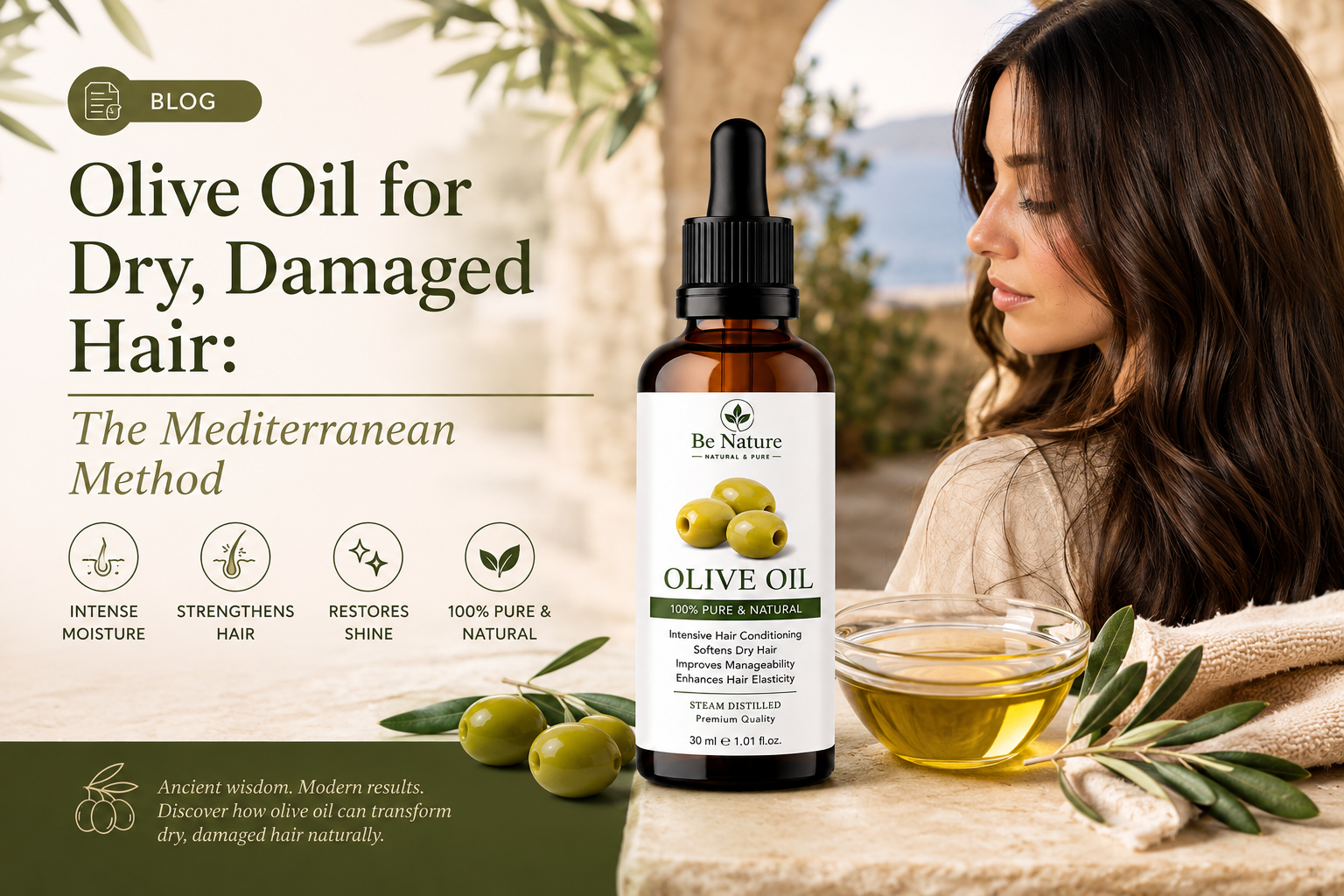
Olive oil has been used for hair and skin care across Mediterranean cultures for centuries, well before it became a mainstream “natural hair care” recommendation. Its usefulness for dry, damaged hair is genuine — but it’s also one of the most commonly overused oils, which is worth addressing directly.
Why Olive Oil Works for Dry, Damaged Hair?
Extra virgin olive oil is rich in oleic acid, antioxidants (including Vitamin E), and squalene, a naturally occurring lipid also produced by the skin. Together, these give olive oil strong moisturising and anti-inflammatory properties, useful for:
- Softening and smoothing — coating and sealing the hair cuticle, reducing the rough texture common in dry or damaged hair.
- Reducing frizz — the sealing effect also helps control frizz caused by moisture loss through a damaged cuticle.
- Soothing a dry, flaky scalp — its anti-inflammatory properties can help calm irritation when massaged into a dry scalp, not just applied to the hair itself.
The Most Common Mistake: Using Too Much, Too Often
Olive oil is heavier than lighter oils like argan or jojoba, and this is exactly where most people go wrong with it. Applied too generously or too frequently — especially on fine or naturally oily hair — it leaves hair looking greasy and weighed down rather than nourished. This is a genuine, common cause of people trying olive oil, disliking the result, and assuming it “doesn’t work,” when the real issue is over-application.
The fix: position olive oil as a weekly deep-conditioning ritual, not a daily product — this is closer to how it’s traditionally used, and it matches its heavier texture much better than daily use would.
How Olive Oil Compares to Coconut Oil?
These two are often used interchangeably, but they work slightly differently:
- Coconut oil penetrates more deeply into the hair shaft itself (the cortex), thanks to its molecular structure.
- Olive oil sits more on the surface of the hair, providing excellent softness, smoothing, and shine, without penetrating as deeply.
Some people use both together — coconut oil as a pre-wash treatment for deeper conditioning, followed by a small amount of olive oil as a finishing step for shine and smoothness.
How to Use Olive Oil Correctly?
- Once, maybe twice, per week — not daily. This is the single most important adjustment for most people trying olive oil for the first time.
- Warm a small amount slightly (not hot) and apply from mid-lengths to ends, avoiding the roots if your scalp tends toward oily.
- If you also want scalp benefits (for dryness or flakiness), massage a small separate amount directly into the scalp.
- Leave in for 20–30 minutes as a standard treatment, or up to an hour for more intensive damage repair.
- Shampoo thoroughly — olive oil, like most heavier oils, often needs a second wash to fully remove.
Olive Oil for a Dry, Flaky Scalp Specifically
Beyond hair strand conditioning, olive oil’s anti-inflammatory properties make it useful for a dry, flaky scalp when massaged in and left for 20–30 minutes before washing — a good option if flaking is caused by dryness rather than the fungal overgrowth behind most true dandruff (in which case, Tea Tree Oil is better suited).
Extra Virgin vs Regular Olive Oil
Extra virgin olive oil is less processed and retains significantly more antioxidants and nutrients than refined or “light” olive oil varieties, making it the better choice specifically for hair and scalp benefit rather than just cost.
Related reading: Which Hair Oil Do You Actually Need? A Scalp-Type Guide