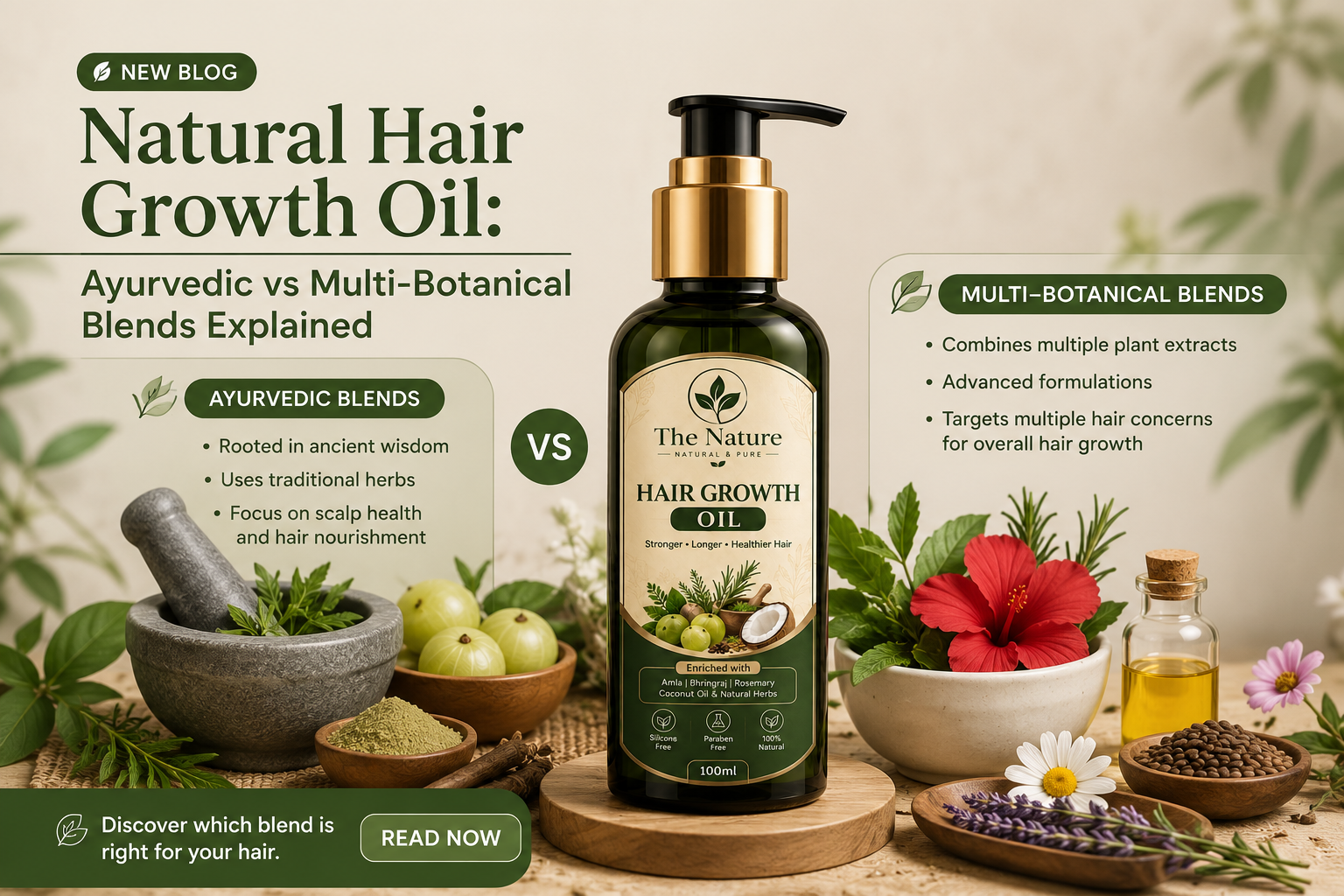
Search “natural hair growth oil” and you’ll find two broad types of products: single-ingredient oils (just rosemary, just castor, just amla) and blended formulas combining multiple oils into one bottle. Both have their place, but blends have a specific advantage worth understanding before you decide which to buy.
Why Single Oils Have Limits?
Each individual oil tends to be good at one or two specific things. Rosemary oil is strong on circulation and follicle stimulation. Castor oil is strong on strand strengthening and follicle nourishment. Amla oil supports pigment-related follicle health. Jojoba balances scalp oil production. None of them, used alone, addresses every factor involved in healthy hair growth — because hair growth itself depends on several different things happening at once: good circulation, a balanced scalp environment, strong follicles, and protection from oxidative damage.
This is the core reasoning behind blended formulas: combining oils that each target a different part of the process, rather than relying on one oil to do everything.
Ayurvedic-Style Blends
Ayurvedic hair oil traditions typically combine a base carrier oil (often sesame or coconut) infused with a range of herbs — amla, bhringraj, fenugreek, curry leaf, and others — each contributing a specific traditional benefit. These formulas tend to emphasize a broader, longer-term approach to hair and scalp health, often rooted in generations of specific herb-and-oil combinations rather than a small, targeted list of ingredients.
Best suited for: people looking for a more holistic, traditional approach to overall hair and scalp wellness, not just a narrow growth-focused formula.
Multi-Botanical Blends
A more modern approach to blending focuses on a smaller number of specific, individually-studied ingredients chosen for clear, targeted reasons — for example, combining rosemary oil (circulation and DHT-related support) with castor oil (follicle nourishment and strand strengthening) and a lighter carrier oil like jojoba (to balance texture and scalp compatibility).
Best suited for: people who want a formula built around specific, individually-recognised active ingredients with a clearer rationale for each one’s inclusion, rather than a longer traditional herb list.
How to Choose Between the Two?
Neither approach is objectively “better” — they reflect different philosophies:
- If you’re drawn to traditional, time-tested herbal combinations and a more holistic wellness angle, an Ayurvedic-style blend fits that better.
- If you prefer understanding exactly what each ingredient in a formula is doing and why, a multi-botanical blend with a shorter, more specific ingredient list is easier to evaluate on those terms.
What to Check Regardless of Style?
Whichever type of blend you choose, a few things are worth verifying:
- Real concentrations, not just a long ingredient list — a formula listing 15 herbs with no indication of proportion may have meaningful amounts of only a few of them, with the rest present in trace quantities mainly for marketing appeal.
- A carrier oil suited to your scalp type — even a well-formulated blend can feel wrong if its base oil (heavy coconut vs light jojoba, for instance) doesn’t suit your scalp.
- Realistic claims — any blend claiming guaranteed results in days rather than months isn’t being accurate about how hair growth actually works.
Our Approach
Our Signature Hair Growth Oil and Rosemary Hair Growth Oil both take the multi-botanical approach — built around a smaller set of ingredients with individually understood mechanisms (circulation support, follicle nourishment, scalp balance) rather than a long traditional herb list, so you know specifically what each component is doing.
Shop Signature Hair Growth Oil → · Shop Rosemary Hair Growth Oil →
Related reading: Rosemary Oil vs Minoxidil: What the Research Actually Shows · Which Hair Oil Do You Actually Need? A Scalp-Type Guide