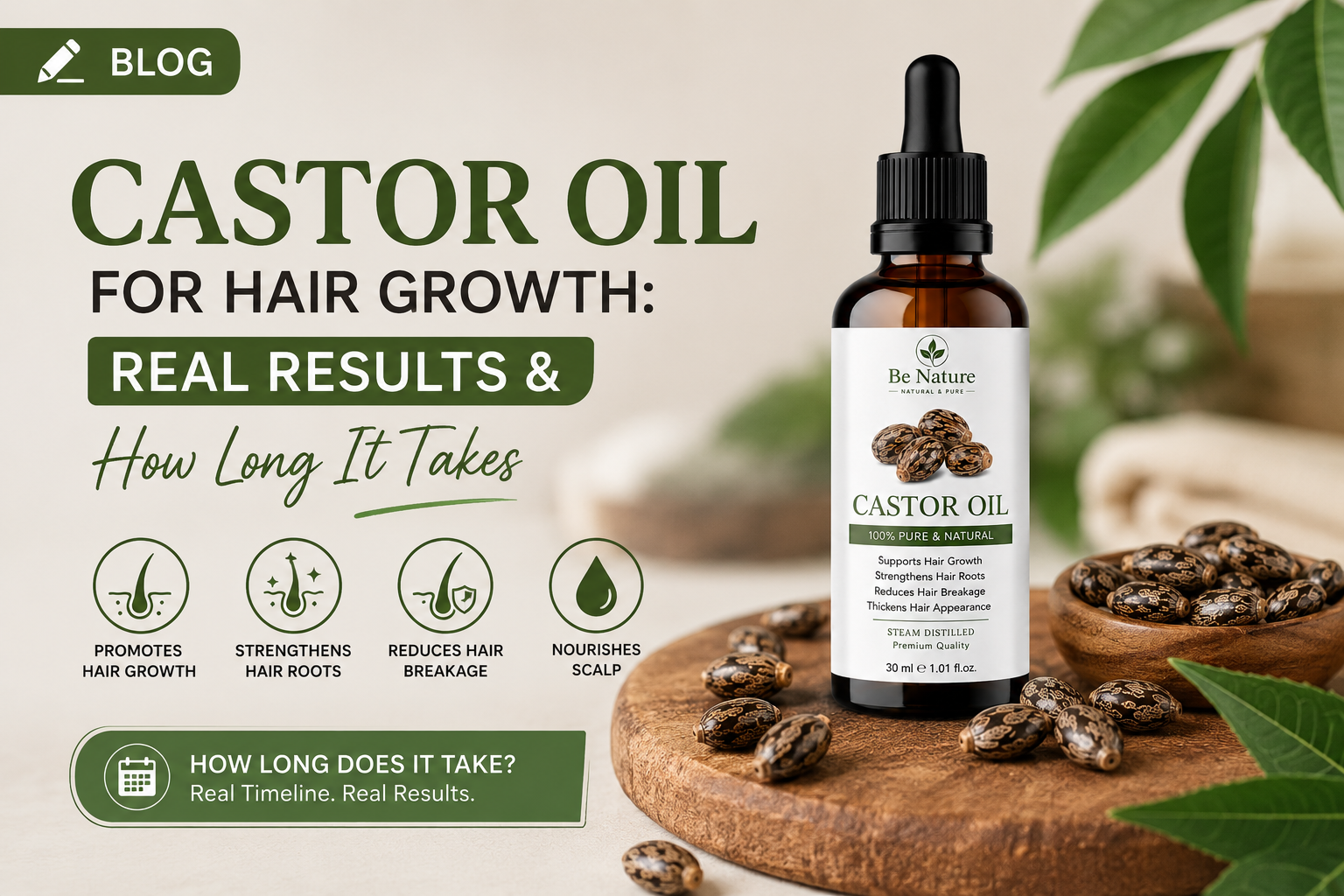
Castor oil is one of the most searched natural hair growth remedies, and for good reason — it has a long history of traditional use and a genuinely plausible mechanism behind its effects. Here’s what it actually does, how long it realistically takes, and how to deal with its famously thick, sticky texture.
Why Castor Oil Is Used for Hair Growth?
Castor oil is unusually rich in ricinoleic acid, an omega-9 fatty acid that makes up the majority of its composition — a higher concentration than almost any other commonly used carrier oil. Ricinoleic acid is believed to improve blood microcirculation to hair follicles, which can support a healthier growth environment by improving the delivery of oxygen and nutrients to the scalp.
Beyond the growth-support angle, castor oil’s thick, viscous texture also coats the hair shaft, which can reduce breakage and split ends — meaning some of its perceived “growth” benefit may actually be reduced hair loss from breakage, rather than faster new growth. Both effects can result in hair looking visibly thicker and fuller over time.
What a Realistic Timeline Looks Like?
Hair grows in cycles, and any topical treatment needs time to work within that natural cycle:
- Weeks 1–4: You may notice softer, less brittle hair and reduced breakage, since castor oil’s conditioning effect on existing strands happens faster than any new growth would.
- Weeks 8–12: This is the more realistic window for noticing changes in thickness or reduced shedding, if castor oil is genuinely supporting your follicles.
- Beyond 12 weeks: Continued consistent use is where most people report their best results, if they’re going to see them at all — individual response varies significantly.
Using castor oil for a week or two and expecting visible results isn’t realistic — this applies to any natural hair growth remedy, not just castor oil specifically.
Dealing With Castor Oil’s Texture
The most common complaint about castor oil isn’t whether it works — it’s how difficult it is to work with:
It’s very thick. Mixing it with a lighter oil (coconut, jojoba, or almond oil) at roughly a 1:1 ratio makes it significantly easier to spread through hair and scalp.
It’s hard to wash out. A single shampoo wash often isn’t enough to fully remove it — a second wash is commonly needed for a clean, residue-free finish, particularly if you’ve used a generous amount.
It has a strong, distinct smell. This is normal and not a sign of poor quality. Blending with a few drops of rosemary or lavender essential oil can help balance the scent.
Castor Oil for Eyebrows and Eyelashes
One of castor oil’s most popular specific uses is for eyebrows and eyelashes, applying the same principle at a smaller scale — a small amount applied nightly with a clean spoolie or cotton swab, being careful to avoid direct contact with the eyes.
Combining Castor Oil With Other Ingredients
Castor oil is commonly paired with:
- Rosemary essential oil — for a stronger combined circulation and follicle-stimulation effect (properly diluted; see our full rosemary oil guide)
- Coconut or jojoba oil — to offset the thick texture and add complementary conditioning benefits
A Note on Jamaican Black Castor Oil
You may see “Jamaican Black Castor Oil” marketed as a more potent variant — this version is roasted before pressing, giving it a darker colour and smokier scent. Some users find it slightly more effective for scalp stimulation, though regular cold-pressed castor oil (which is gentler and better suited for sensitive scalps) works well for most people.
If you’re specifically interested in beard growth rather than scalp hair, see our dedicated guide: Castor Oil for Beard Growth.
Related reading: How to Use Rosemary Oil for Hair Growth: Step-by-Step · Which Hair Oil Do You Actually Need? A Scalp-Type Guide