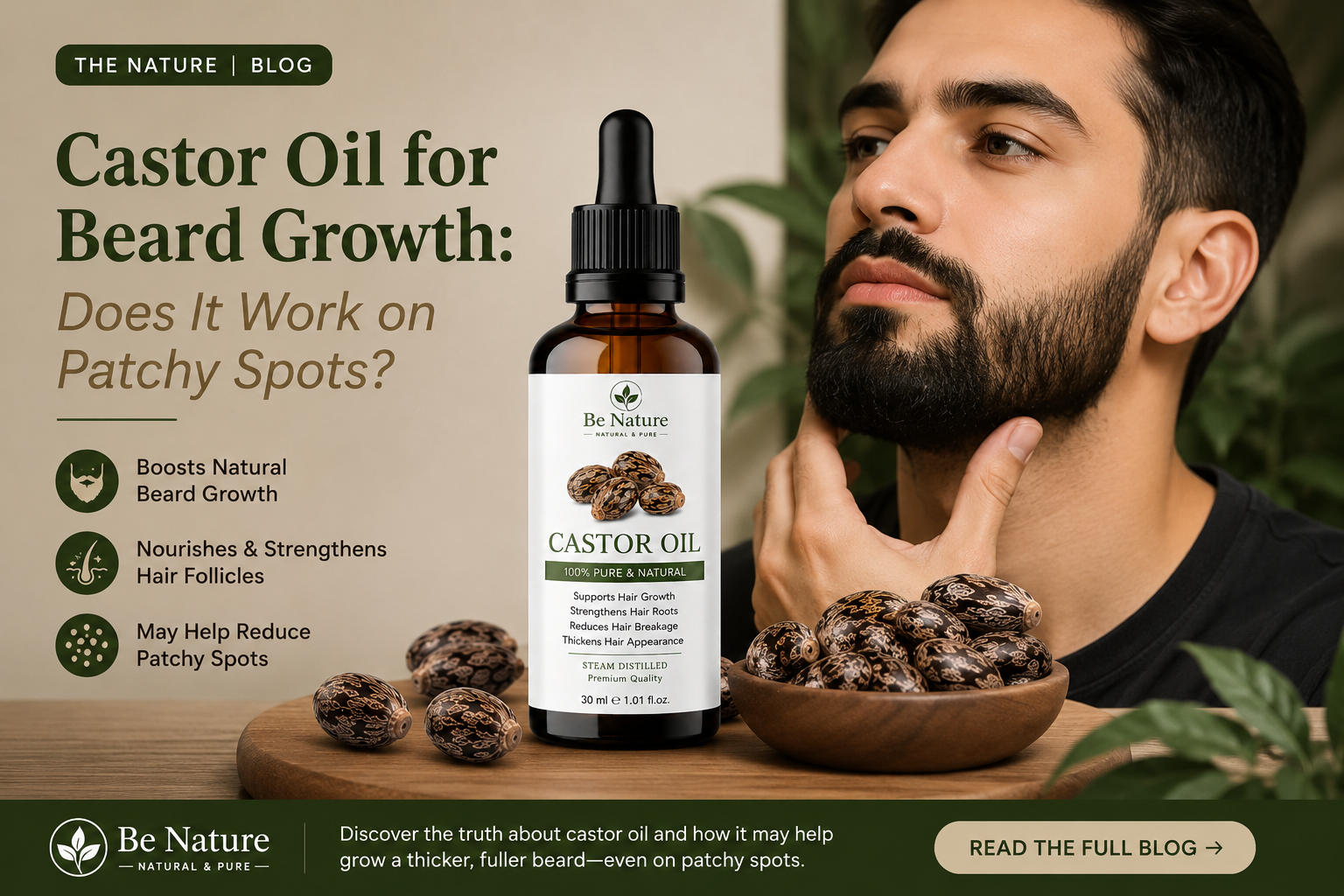
Patchy beard growth is one of the most common (and most frustrating) grooming concerns for men trying to grow out a fuller beard, and castor oil comes up constantly as a fix. It’s worth being specific about what it can and can’t realistically do here, since beard hair behaves differently from scalp hair in some important ways.
Why Beards Get Patchy in the First Place?
Beard patchiness is primarily determined by the distribution and density of androgen receptors in your facial skin, a genetic factor, not something caused by poor grooming or lack of effort. Some areas of the face simply have fewer active hair follicles than others, particularly along the cheeks, which is why patchiness there is so common even in men with fuller growth on the chin and jawline.
This matters because it sets a realistic expectation: castor oil cannot create new hair follicles where none exist. If a patch of skin genuinely has no active follicles, no topical treatment, castor oil included, will produce hair there.
What Castor Oil Can Realistically Help With?
Where castor oil has a more plausible role is in supporting existing, but underperforming or dormant, follicles, areas where hair growth is present but thin, weak, or slow, rather than areas with no follicles at all. Its ricinoleic acid content is believed to support blood microcirculation to hair follicles, potentially helping already-present but sluggish follicles produce thicker, more consistent growth over time.
It may also help with:
- Strengthening existing beard hair, its thick, coating texture can reduce breakage in beard hair that’s currently growing but thin or weak.
- Conditioning coarse or wiry areas, making uneven texture across the beard more manageable and consistent-looking.
A Realistic Timeline
Similar to scalp hair growth, beard hair grows in cycles, and any improvement from castor oil use requires patience:
- Most people report needing at least 8–12 weeks of consistent use before any change in existing beard density or thickness becomes noticeable.
- If patchiness is due to a genuine absence of follicles rather than weak, underperforming ones, no amount of time will change the outcome. This is a genetic limit, not a consistency problem.
How to Use Castor Oil for Beard Growth?
- Massage a small amount (start with 3–5 drops) into the skin beneath the beard, focusing on patchy or sparse areas.
- Because castor oil is thick, mixing it 1:1 with a lighter carrier oil (jojoba or argan oil) makes it easier to spread evenly.
- Massage in circular motions for 2–3 minutes to support circulation.
- Leave in as a daily treatment, or use as a more intensive overnight soak 3–4 nights per week.
- Expect to wash your beard twice if you’ve used a generous amount, since castor oil’s thick texture often isn’t fully removed in a single wash.
Combining With Other Ingredients
Castor oil is often paired with rosemary essential oil (properly diluted) for a stronger combined effect on circulation and follicle activity, since rosemary works through a somewhat different mechanism (circulation plus mild DHT-blocking properties). Our Beard Growth Oil combines castor oil with rosemary, jojoba, argan, almond oil, tea tree, and Vitamin E in a single pre-blended formula for exactly this reason.
When to Manage Expectations Instead?
If you’ve used castor oil (or any beard growth treatment) consistently for 3+ months with genuinely no change, it’s likely that the patchiness in question is driven by an absence of active follicles rather than under-stimulated ones, at that point, styling approaches (careful trimming to even out the appearance) tend to be more realistic than continuing to search for a topical fix.
Shop Castor Oil → or Shop Beard Growth Oil →
Related reading: Best Beard Oil for Men in Pakistan: What to Actually Look For · Castor Oil for Hair Growth: Real Results & How Long It Takes
Browse the range: hair growth oils