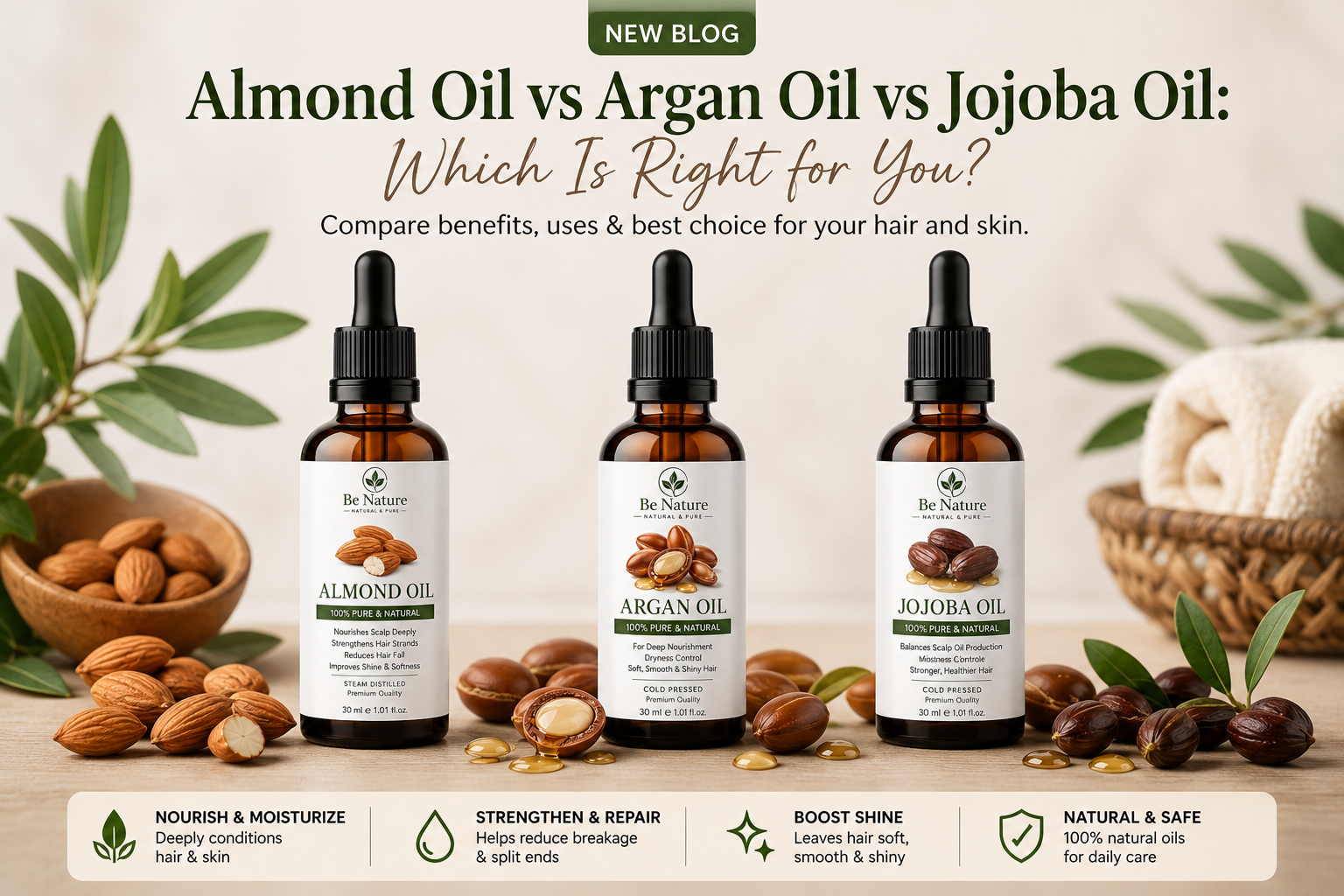
These three oils get recommended constantly for hair care, often interchangeably — but they’re genuinely different in texture, weight, and which specific problems they solve best. If you’re trying to decide which one to actually buy, here’s a direct comparison.
Quick Comparison Table
| Almond Oil | Argan Oil | Jojoba Oil | |
|---|---|---|---|
| Texture | Light-medium | Very light | Very light |
| Absorption speed | Moderate | Fast | Fast |
| Best for hair type | Dry, brittle, damaged | Frizzy, colour-treated, dull | Fine, oily-scalp-prone |
| Main strength | Deep conditioning, strengthening | Shine, frizz control, colour protection | Scalp balancing, lightweight moisture |
| Can be used on skin/face | Yes | Yes | Yes |
| Risk for oily scalps | Moderate — can feel heavy in excess | Low | Very low |
| Risk for fine hair | Can weigh down if overused | Low risk in small amounts | Lowest risk |
Almond Oil: Best for Dry, Damaged Hair That Needs Real Conditioning
Sweet almond oil is rich in Vitamin E, fatty acids, and minerals like magnesium, making it particularly effective for strengthening brittle hair and reducing breakage. It’s heavier than argan or jojoba, which is exactly why it works well for genuinely dry or over-processed hair that needs deeper conditioning — but it’s also why it can feel like too much for fine or naturally oily hair if used generously.
Choose almond oil if: your hair is dry, brittle, or damaged from heat/chemical processing and needs stronger conditioning than a lightweight oil can provide.
Argan Oil: Best for Shine, Frizz, and Colour-Treated Hair
Argan oil absorbs faster than almond oil and leaves a noticeably lighter finish, which is why it’s often used as a finishing oil rather than a deep, pre-wash treatment. Its antioxidant content also makes it a good choice for colour-treated hair specifically, since it may help slow colour fade and repair some of the surface damage from processing.
Choose argan oil if: your main concern is frizz, dullness, or protecting/reviving colour-treated hair, and you want something that absorbs quickly without heaviness.
Jojoba Oil: Best for Fine Hair and Oily or Sensitive Scalps
Jojoba is technically a liquid wax rather than a true oil, with a structure that closely resembles natural scalp sebum. This is what makes it uniquely suited to oily scalps (it can help balance oil production rather than add to it) and fine hair (it’s light enough not to weigh hair down even at the roots).
Choose jojoba oil if: you have an oily scalp, fine hair that gets weighed down easily, or sensitive skin that reacts to heavier oils.
Can You Use More Than One?
Yes — many people use different oils for different parts of their routine. A common approach:
- Jojoba oil on the scalp for balance and lightweight moisture
- Argan oil on the mid-lengths and ends for shine and frizz control
- Almond oil as an occasional deeper overnight treatment when hair needs extra conditioning
There’s no conflict in using more than one — the key is matching each oil to the specific job it’s best suited for, rather than choosing just one and expecting it to do everything.
If You’re Still Not Sure
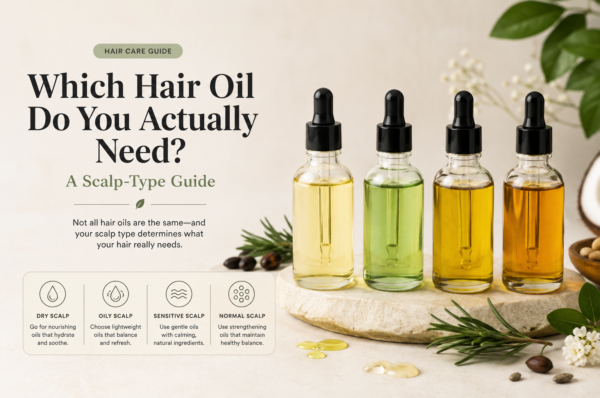
If you’re deciding based on a specific concern rather than general hair type, our full Scalp-Type Guide breaks down recommendations by concern (oily scalp, dandruff, thinning, greying, and more) across our entire oil range, not just these three.
Shop Almond Oil → · Shop Argan Oil → · Shop Jojoba Oil →
Related reading: Jojoba Oil for Oily Scalp: Why It Works · Argan Oil for Colour-Treated Hair: How to Protect Your Colour