If your scalp already gets oily fast, adding more oil to it sounds like the last thing you should do. But jojoba oil is one of the few oils that genuinely defies that logic — and understanding why explains a lot about how to actually manage an oily scalp instead of just fighting it.
Why Jojoba Oil Isn’t Really an “Oil”?
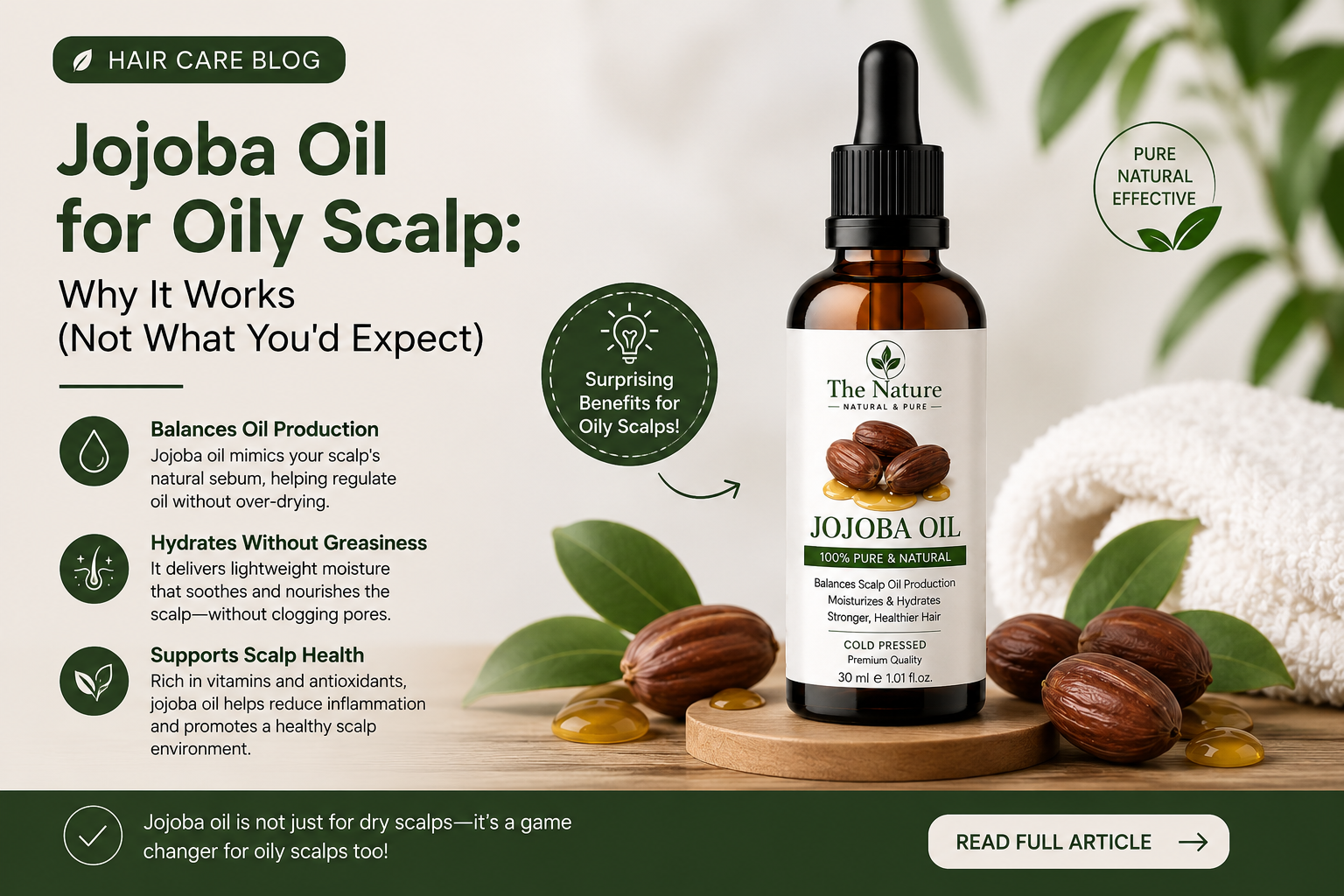
Technically, jojoba oil is a liquid wax ester, not a true oil. This matters because its molecular structure closely resembles sebum — the natural oil your scalp already produces. Most other plant oils (coconut, olive, almond) have a different chemical structure that sits differently on skin and hair.
How This Helps an Oily Scalp?
Because jojoba’s structure is so similar to natural sebum, applying it can send a signal to the sebaceous glands that enough oil is already present, which may help reduce excess sebum production rather than adding to it. This is the opposite of what happens with heavier oils, which simply sit on top of existing oil and make the scalp feel greasier for longer.
In practical terms, this means jojoba oil can help:
- Balance oil production over time with consistent use
- Provide moisture and nourishment without the heavy, weighed-down feeling most oils cause on oily scalps
- Support scalp health without disrupting its natural oil balance
Does This Mean You Should Use More Oil, Not Less?
Not exactly — it means jojoba oil is a better-suited choice than heavier alternatives, not a reason to apply more product overall. A small, consistent amount used correctly works better than a large quantity used occasionally.
How to Use Jojoba Oil for an Oily Scalp?
- Use a small amount — 3–5 drops for a scalp treatment.
- Apply directly to the scalp (not just the hair) and massage in gently with fingertips.
- Leave in for 20–30 minutes before washing, rather than as an all-day leave-in, especially when starting out.
- Use 2–3 times per week rather than daily until you understand how your scalp responds.
Jojoba Oil Alongside Other Oily-Scalp Concerns
Oily scalps are also often prone to dandruff or mild irritation. Jojoba oil pairs well with a small amount of properly diluted Tea Tree Essential Oil, which has antimicrobial properties that can help manage the buildup and occasional flakiness that comes with excess oil production, without adding the heaviness of a thicker carrier oil.
What to Avoid on an Oily Scalp?
Coconut oil and castor oil as regular, frequent treatments — both are heavier and can leave an oily scalp feeling greasy for longer, even though they’re excellent choices for dry scalp types.
Jojoba Oil for Other Scalp and Hair Concerns
Beyond oily scalps specifically, jojoba oil is also commonly used for dandruff management, fine hair (since it’s lightweight and won’t weigh hair down), and as a gentle option for sensitive skin, since it’s considered hypoallergenic for most people.
Related reading: Which Hair Oil Do You Actually Need? A Scalp-Type Guide · Tea Tree Oil for Dandruff & Scalp Infection: What Actually Helps