
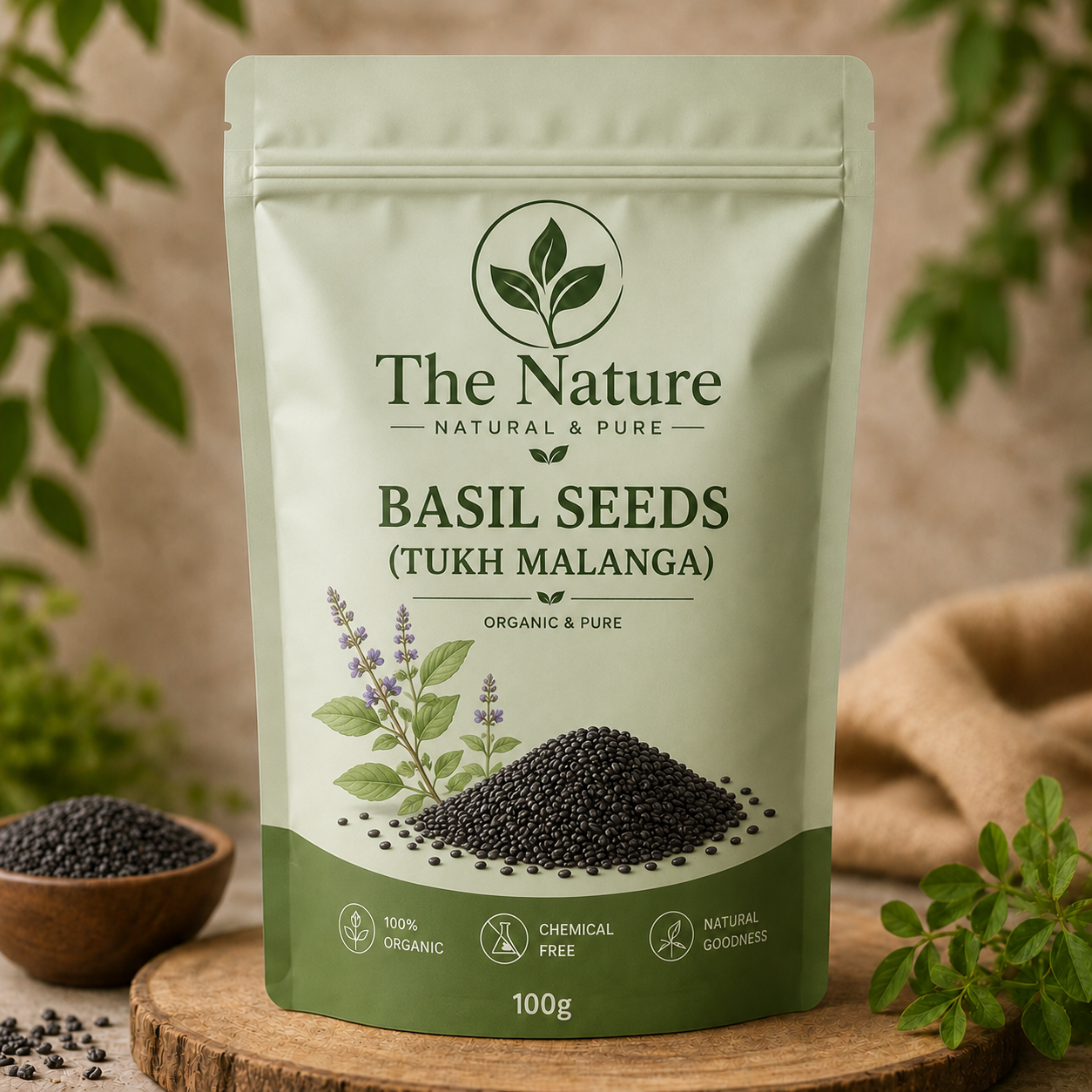
Organic Basil Seeds (Tukh Malanga) – Pakistan’s Favourite Cooling Superfood
The tiny black seeds floating in your glass of Rooh Afza have been doing more for your health than you realized.
If you have ever had falooda, Rooh Afza sharbat, or any refreshing summer drink in Pakistan, you have probably seen these seeds floating in your glass. Known locally as Tukh Malanga (تخم ملنگا) and also called Sabja or Tukmaria seeds, Basil Seeds come from the sweet basil plant and have been part of South Asian traditional medicine and cooking for centuries.
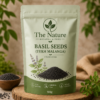
At The Nature, our 100% organic Basil Seeds are carefully cleaned and packed to preserve their natural cooling properties and nutritional goodness — ready for your summer drinks, daily wellness routine, and everything in between.
Why Choose The Nature’s Basil Seeds (Tukh Malanga)?
No additives, fillers, or artificial processing — just pure, triple-cleaned organic Basil Seeds. Naturally cooling and rich in fiber, antioxidants, and essential minerals. Swells quickly in water within 5–10 minutes, making them ideal for sharbats, falooda, and smoothies. Halal and gluten-free. A trusted ingredient in Pakistani households for generations.
Benefits of Basil Seeds (Tukh Malanga)
Cools the Body & Reduces Heat
Basil seeds are well-known for their ability to cool the body down due to being commonly found in hot climates such as India and Pakistan. When included within food and drinks, they also cool the body down, giving a cooled state after consuming. This is why basil seeds are an excellent food choice during the summer months because they will help reduce your risk of heat-related illnesses such as dehydration and heat exhaustion.
Supports Healthy Digestion
The soluble fiber in basil seeds forms a gel-like substance when soaked. This gel helps ease bowel movements and may relieve constipation. Many people in Pakistan traditionally use soaked Tukh Malanga to soothe stomach discomfort and acidity.
Aids Weight Management
Basil seeds are an incredibly effective tool for losing weight, as they are full of fiber. When basil seeds are soaked in water, they expand to a gel-like consistency which can help you feel fuller longer. This can help to eliminate hunger cravings and reduce the amount of calories consumed per day.
Supports Heart Health
According to researchers, basil seeds help in preventing heart diseases. They keep your blood pressure controlled. Their omega-3 fatty acid content further supports long-term cardiovascular wellness.
Helps Regulate Blood Sugar
Basil seeds have been shown to support blood sugar control through their ability to slow down carbohydrate metabolism, which is the process by which carbohydrates convert into glucose. Because basil seeds aid in maintaining a steady blood sugar level, they can also assist people in maintaining stable energy levels and managing their diabetes naturally.
Rich in Essential Minerals
Basil seeds are a good source of dietary fiber, protein, and minerals including calcium, magnesium, and potassium. They also contain antioxidants which can help protect the body against damage from free radicals.
How to Use Basil Seeds (Tukh Malanga)?
Classic Tukh Malanga Sharbat:
Soak 1 tablespoon of Tukh Malanga in a glass of water for 10–15 minutes until the seeds swell and form a jelly-like coating. Add to Rooh Afza, lemon water, milk, or coconut water and enjoy chilled.
Falooda:
Soak 1 tablespoon of seeds in water. In a tall glass, layer vermicelli, soaked Tukh Malanga, rose syrup, chilled milk, and a scoop of ice cream. Top with chopped nuts for Pakistan’s most beloved dessert drink.
Morning Wellness Drink:
The recommended method is to soak one to two spoons of Malanga seeds in water overnight and consume them in the morning.
In Smoothies & Yogurt:
Add soaked seeds to smoothies, yogurt, or fruit bowls for extra fiber and texture.
In Cooking:
Basil seeds can also be used in sauces to thicken them and as egg substitutes in certain recipes.
Note: Always soak Tukh Malanga before consuming. Never eat them dry, as unsoaked seeds can pose a choking hazard. Start with 1 teaspoon and gradually increase to 1–2 tablespoons daily. Those on blood-thinning medication should consult a doctor before regular use.
Product Details
| Detail | Info |
|---|---|
| Product Name | Organic Basil Seeds (Tukh Malanga / تخم ملنگا) |
| Net Weight | 100g / 200g (update as per your packaging) |
| Form | Whole Seeds |
| Scientific Name | Ocimum basilicum |
| Origin | 100% Natural, Organically Grown |
| Storage | Store in a cool, dry place away from moisture |
| Shelf Life | 24 months from packaging |
Frequently Asked Questions
Q: Are Tukh Malanga and Chia Seeds the same thing?
No. Most people in Pakistan think chia seeds and basil seeds are just two names for the same thing, but that is not true at all. They look similar once soaked, but their background and nutrition are different. Chia comes from Mexico and is now popular worldwide as a superfood, while basil seeds known here as Tukhm Malanga are an old favourite in desi drinks like Rooh Afza and falooda. Both are excellent superfoods, but they are distinct products.
Q: How long do Tukh Malanga seeds take to swell?
Basil seeds swell much faster than chia seeds — usually within 5–10 minutes of soaking in water. For best results, soak for at least 10–15 minutes before consuming.
Q: Can Tukh Malanga help with weight loss?
Yes. Their high fiber content promotes a feeling of fullness, helping reduce overall calorie intake throughout the day when consumed regularly as part of a balanced diet.
Q: Is Tukh Malanga safe during pregnancy?
Pregnant women should consult their doctor before consuming Tukh Malanga regularly, as a precaution.
Q: Can children consume Tukh Malanga?
Yes, but with caution and only after seeds have been fully soaked in water. Never give dry, unsoaked seeds to children as they pose a choking hazard.
Q: When is the best time to drink Tukh Malanga?
Morning is a popular time — soaked overnight and consumed on an empty stomach for digestion and cooling benefits. They are also widely consumed during Ramzan for cooling and hydration during Iftar.
Q: Is Tukh Malanga good for acidity?
Yes. Many people in Pakistan traditionally use soaked Tukh Malanga to soothe stomach acidity and discomfort, a practice backed by generations of use in South Asian households.
Q: How much Tukh Malanga should I take daily?
1–2 tablespoons of soaked seeds per day is the general recommendation for most healthy adults. Excessive consumption may lead to bloating or digestive discomfort.
Go Natural. Choose The Nature.
Pakistan’s most beloved summer superfood — now in its purest, most organic form. Order your Tukh Malanga today and keep this cooling, nourishing tradition alive in your home.



Reviews
There are no reviews yet.