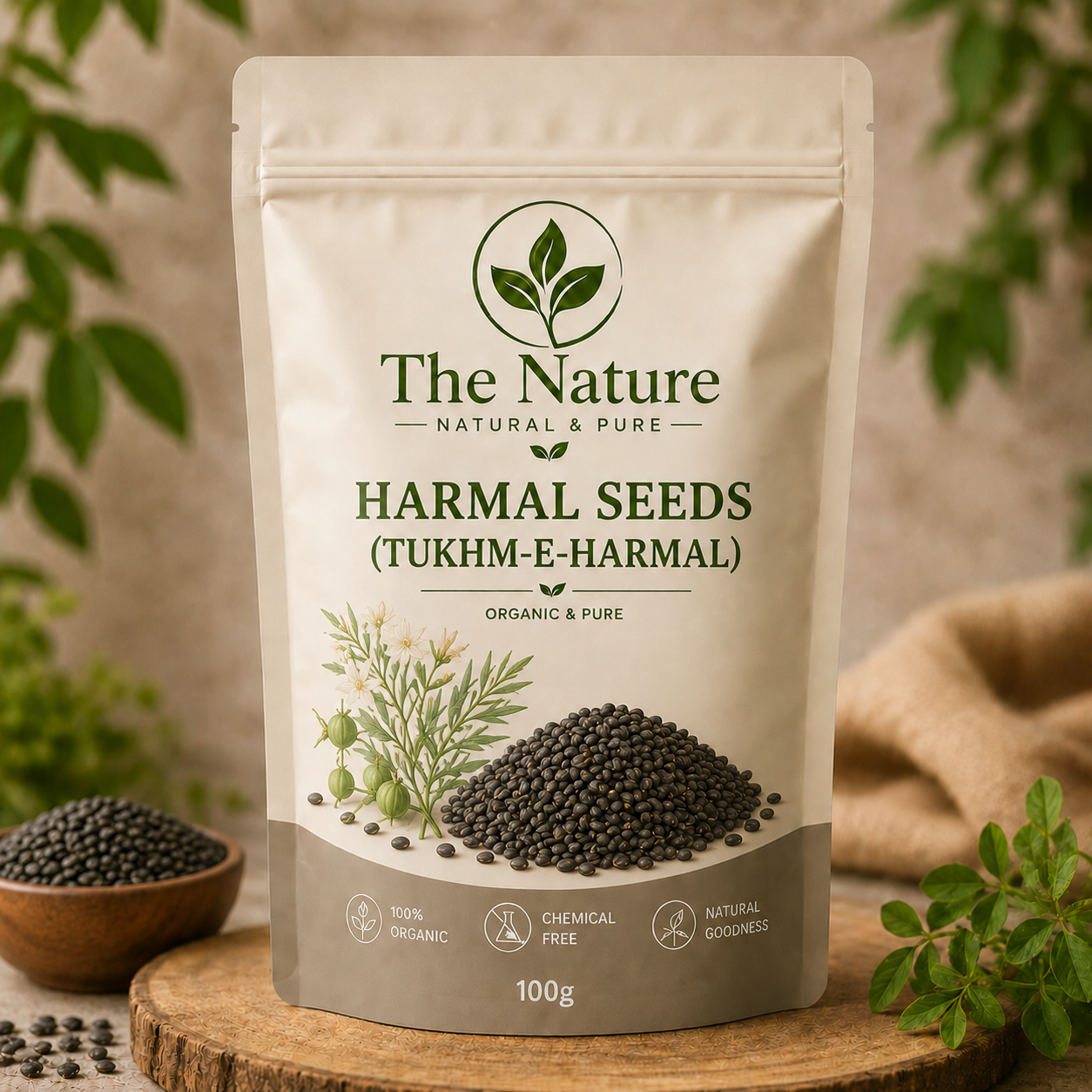
Harmal Seeds (Tukhm-e-Harmal) – One of South Asia’s Most Powerful Traditional Herbs
A herb that has been respected, and handled with care, for centuries across Pakistan, the Middle East, and Central Asia.
Known locally as Tukhm-e-Harmal (تخمِ حرمل) and scientifically as Peganum harmala, Harmal Seeds hold a uniquely powerful place in traditional South Asian, Unani, and Ayurvedic medicine. These small, reddish-brown seeds from the Wild Rue plant have been valued for centuries for their medicinal, cultural, and spiritual significance, from relieving digestive discomfort and joint pain to supporting mental calm and being burned as a purifying herb in Pakistani homes.
At The Nature, our 100% pure Harmal Seeds are carefully sourced, sun-dried, and packed to preserve their natural potency, for those who understand and respect this traditional herb.
Why Choose The Nature’s Harmal Seeds?
100% pure and natural, carefully sourced and sun-dried to preserve natural alkaloid content. Used for centuries in Unani, Ayurvedic, and South Asian herbal traditions. Valued for both medicinal and spiritual and cultural uses in Pakistani households. Free from additives, fillers, or artificial processing. Packed with strict attention to quality, authenticity, and purity.
Traditional and Medicinal Benefits of Harmal Seeds
Supports Digestive Health
Harmal Seeds are effective in treating digestive issues including bloating, indigestion, loss of appetite, and general stomach discomfort. Their antispasmodic properties help relax the digestive tract and ease cramping.
Relieves Joint Pain and Inflammation
Compounds in Harmal Seeds can reduce inflammation, making them beneficial for conditions like joint pain, swelling, and arthritis. Traditionally, preparations from Harmal have been used in Unani medicine as a natural pain-relieving remedy.
Supports Mental Calm and Stress Relief
Harmine and harmaline, two active alkaloids in Harmal Seeds, may help in managing stress, depression, and anxiety by modulating neurotransmitters in the brain. Harmal has been traditionally used for its calming and relaxing effects in Unani practice.
Supports Respiratory Health
Harmal Seeds are beneficial for clearing respiratory passages, relieving cough, and easing breathing difficulties. Traditionally used in herbal preparations for respiratory comfort.
Supports Menstrual Health
The decoction prepared from the seeds of this herb is used in traditional medicine for regulating periods and in treating difficult and painful menstruation. Their antispasmodic properties help relax uterine muscles and reduce cramping.
Powerful Antimicrobial and Antifungal Properties
Harmal Seeds are known for their powerful antimicrobial and antifungal properties, which help fight infections and support skin health in conditions such as eczema, psoriasis, and fungal skin infections.
Natural Detoxifying Agent
Used as a natural detoxifying herb in traditional medicine to support liver function, cleanse the body, and eliminate toxins.
Spiritual and Cultural Uses
Harmal Seeds hold a deeply rooted spiritual significance in Pakistani, Middle Eastern, and Central Asian culture. They are widely burned, known locally as Esfand or Harmal dhoop, to purify the home, ward off the evil eye (Nazar), and cleanse the environment. This practice is a centuries-old tradition observed across millions of Pakistani households.
How to Use Harmal Seeds?
For Spiritual Purification (Burning / Dhoop):
The most common use in Pakistani households, place a small amount of Harmal Seeds on burning charcoal or a heat-proof surface and allow the smoke to fill the room. Used traditionally to cleanse the home and protect against negative energy.
As a Herbal Decoction (Under Practitioner Guidance):
Harmal Seeds can be prepared as a traditional decoction under the guidance of a qualified Unani or Ayurvedic practitioner. Dosage and preparation must be carefully followed as these seeds are potent.
Topically for Skin:
Ground Harmal Seeds can be applied topically in traditional preparations for skin conditions such as eczema or fungal infections, always under guidance of a herbal practitioner.
Important Safety Note: Harmal Seeds contain powerful alkaloids, harmine and harmaline, and must be used with great care and in strictly moderate amounts. These seeds are not suitable for self-medication in high doses. Internal use should only be undertaken under the guidance of a qualified Unani or Ayurvedic practitioner. Pregnant and breastfeeding women must not use Harmal Seeds internally. Keep out of reach of children. Excessive intake can cause serious side effects including nausea, vomiting, and in severe cases, toxicity.
Product Details
| Detail | Info |
|---|---|
| Product Name | Harmal Seeds (Tukhm-e-Harmal / تخمِ حرمل) |
| Net Weight | 50g / 100g (update as per your packaging) |
| Form | Whole Seeds |
| Scientific Name | Peganum harmala |
| Common Names | Wild Rue, Syrian Rue, Esfand |
| Origin | 100% Natural, Sun-Dried |
| Storage | Store in a cool, dry place away from moisture and sunlight |
| Shelf Life | 24 months from packaging |
Frequently Asked Questions
Q: What is Tukhm-e-Harmal used for in Pakistan?
Tukhm-e-Harmal is used for two primary purposes in Pakistani culture, as a traditional medicinal herb in Unani practice for digestion, joint pain, stress relief, and menstrual health, and as a spiritual herb burned as dhoop to purify the home and protect against the evil eye (Nazar). Both uses are deeply rooted in South Asian and Middle Eastern tradition.
Q: Can I burn Harmal Seeds at home?
Yes. Burning Harmal Seeds, known as Esfand or Harmal dhoop, is a centuries-old tradition across Pakistani and Middle Eastern households. Ensure the room is well-ventilated during burning and avoid prolonged inhalation of the smoke.
Q: Are Harmal Seeds safe to consume?
Harmal Seeds contain potent alkaloids and must only be consumed under the guidance of a qualified Unani or Ayurvedic practitioner, in carefully controlled amounts. They are not suitable for self-medication in high doses, and should never be consumed by pregnant or breastfeeding women.
Q: What are the active compounds in Harmal Seeds?
Harmal Seeds contain several alkaloids including harmine, harmaline, harmanine, vasicine, and vasicinone. These compounds are responsible for both the therapeutic properties and the potential risks associated with excessive use.
Q: Are Harmal Seeds the same as Esfand?
Yes. Harmal, Esfand, Syrian Rue, and Wild Rue all refer to the same plant, Peganum harmala. The seeds are known by different names across South Asian, Middle Eastern, and Central Asian cultures, but they are the same seed with the same properties.
Q: Can Harmal Seeds be used for skin conditions?
In traditional practice, ground Harmal Seeds have been applied topically for skin conditions such as eczema, psoriasis, and fungal infections. Topical use should still be approached with caution and a patch test is recommended. Consult a herbal practitioner before use.
Go Natural. Choose The Nature.
A herb that has earned the deepest respect in centuries of tradition, now available in its purest form. Order your Harmal Seeds today and honor this herb the way generations before you have.
Browse more: seeds and herbs



Reviews
There are no reviews yet.