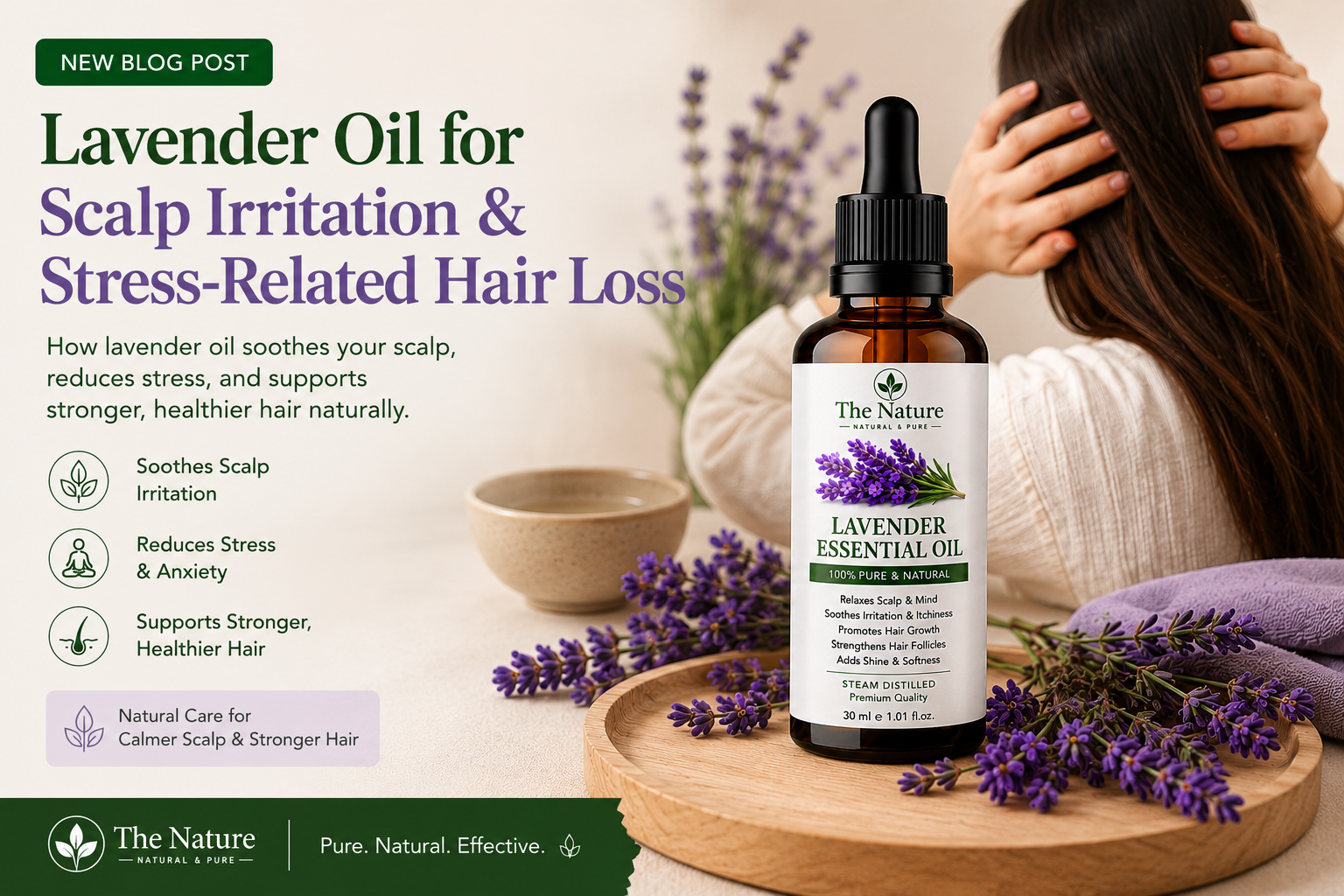
Lavender oil tends to get filed under general “calming aromatherapy” and not much else, which undersells what it can actually contribute to hair and scalp health. It has two genuinely separate, useful roles here: calming physical scalp irritation, and addressing hair loss connected to stress — which are different problems that happen to have some overlapping causes.
Lavender Oil for Physical Scalp Irritation
Lavender essential oil has recognised anti-inflammatory and antimicrobial properties, which make it useful for calming a scalp that’s irritated, itchy, or mildly inflamed — whether from dryness, product sensitivity, or general environmental irritation. Unlike some more intense essential oils (tea tree, for instance), lavender is considered one of the gentler options, which is part of why it’s often recommended specifically for sensitive scalps that react poorly to stronger treatments.
Lavender Oil and Stress-Related Hair Loss
This is the less commonly discussed angle, and it’s worth separating from general “hair growth” claims. Chronic stress is linked to a specific type of hair loss called telogen effluvium, where a stress event pushes an unusually large number of hair follicles into the resting (telogen) phase prematurely, leading to noticeable shedding weeks or months later.
Lavender oil’s role here works on two levels:
Topical, direct effect — some research has looked at lavender oil’s potential to support healthier hair follicle activity, though this evidence is less extensive than for ingredients like rosemary oil.
Indirect, stress-reduction effect — lavender’s calming aromatherapy properties are more established, and since stress is a known contributor to some forms of hair loss, incorporating a calming scalp massage ritual with lavender oil may help address the underlying stress contributing to shedding, even if the oil itself isn’t the primary active mechanism for hair regrowth.
This is a more honest way to think about it than treating lavender oil as a standalone hair-loss cure: it’s most useful as part of a routine that addresses both the physical scalp environment and the broader stress factor, rather than a substitute for managing the stress itself.
How to Use Lavender Oil for Scalp Irritation?
- Always dilute — mix 3–5 drops of lavender essential oil into 1–2 tablespoons of a carrier oil (jojoba is a good, gentle pairing for sensitive scalps).
- Apply directly to irritated areas of the scalp using fingertips, massaging gently rather than vigorously.
- Leave in for 20–30 minutes, or as an overnight treatment for more persistent irritation.
- Use 2–3 times per week, or as needed when irritation flares up.
Using Lavender Oil as an Evening Ritual for Stress-Related Shedding
Since lavender’s aromatherapy benefits are part of its usefulness here, applying it as an evening scalp massage — rather than a quick daytime application — may add a calming, stress-reducing element to the routine itself, alongside the direct scalp benefits.
Combining With Other Oils
Lavender blends well with most other hair-care oils and essential oils, including rosemary, jojoba, and tea tree. If you’re combining multiple essential oils in one blend, keep the total essential oil concentration under roughly 3% of the overall mixture to avoid over-concentrating active compounds.
A Note for Pregnant or Breastfeeding Women
As with most essential oils, pregnant or breastfeeding women should consult a healthcare professional before using lavender oil, even topically.
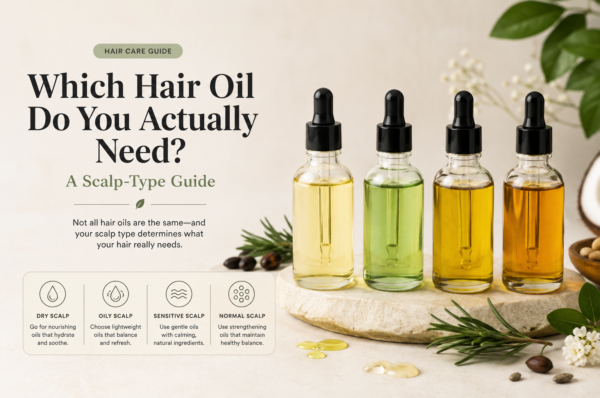
Related reading: Which Hair Oil Do You Actually Need? A Scalp-Type Guide