Rosemary oil has a genuine, research-supported role in supporting hair growth (see our full breakdown of what the research actually shows), but how you use it matters almost as much as the oil itself. Applying it incorrectly — too concentrated, too infrequently, or without patience for results — is the most common reason people feel it “didn’t work” for them.
Here’s the correct method, step by step.
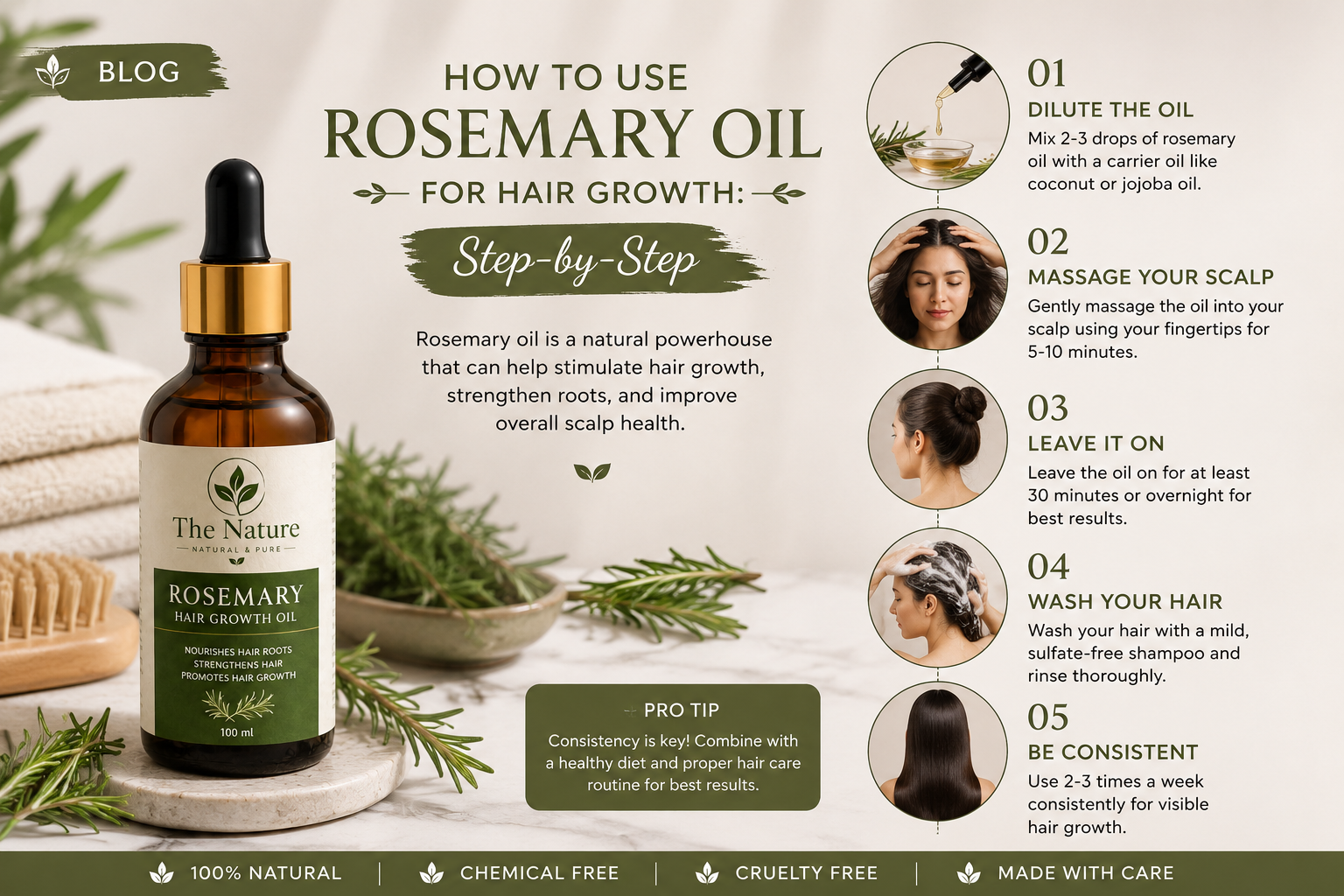
Step 1: Always Dilute Before Applying to the Scalp
Rosemary essential oil is highly concentrated and should never be applied directly to the scalp undiluted — doing so significantly increases the risk of irritation, redness, or a burning sensation.
Standard dilution ratio: roughly 1 part rosemary essential oil to 10 parts carrier oil. In practical terms, this means about 3–5 drops of rosemary essential oil mixed into 1–2 tablespoons of a carrier oil such as jojoba, coconut, or castor oil.
Step 2: Choose a Carrier Oil Based on Your Secondary Goal
Rosemary oil is rarely used entirely alone — pairing it with a carrier oil that addresses a secondary concern tends to work better than rosemary in isolation:
- Castor oil — if your main concern is thinning or slow growth; castor’s ricinoleic acid content complements rosemary’s circulation-boosting effect, and this combination has shown strong results in more recent placebo-controlled research.
- Jojoba oil — if you also have an oily or sensitive scalp; jojoba’s lightweight, sebum-like structure won’t add heaviness.
- Coconut oil — if your hair is also dry or damaged and needs deeper conditioning alongside the growth-support benefits.
Step 3: Apply and Massage Correctly
- Section your hair so you can access the scalp directly, not just the hair strands.
- Using your fingertips (not nails), apply the diluted oil directly to the scalp in small sections.
- Massage in circular motions for 3–5 minutes. The massage itself contributes to improved scalp circulation, independent of the oil.
- Work any remaining oil through the length of the hair if you’d like added shine and conditioning.
Step 4: Decide Between a Leave-In or Soak Treatment
As a leave-in: apply a small amount (2–3 drops of the diluted mix) and don’t rinse out — suitable for daily or near-daily use.
As an overnight soak: apply a more generous amount to the scalp, massage thoroughly, and leave overnight (consider a towel or old pillowcase to protect bedding), then wash out in the morning. This deeper treatment is typically done 2–3 times per week rather than daily.
Step 5: Be Consistent and Patient
This is the step most people underestimate. Based on the actual clinical research (six months in the original 2015 study, with some newer research showing partial effects at six weeks), meaningful, visible results generally require:
- 3–6 months of consistent, twice-daily use for noticeable changes in hair count or thickness
- Some improvement in scalp condition and hair texture may be noticeable sooner, within a few weeks
Using it inconsistently — a few times, then stopping, then starting again — is unlikely to show the results that consistent, sustained use can.
A Simple DIY Rosemary Hair Growth Blend
For a basic at-home mix combining rosemary with a supportive carrier oil:
- 1–2 tablespoons castor oil (or jojoba oil, for a lighter feel)
- 4–5 drops rosemary essential oil
- Mix thoroughly in a small bottle before each use, since essential oils and carrier oils can separate over time
Apply to the scalp 2–3 times per week as a soak, or use a smaller amount daily as a lighter leave-in treatment.
A Note on Safety
Always patch test any new oil blend on a small area of skin (such as the inner forearm) 24 hours before applying to the scalp, particularly if you have sensitive skin or a history of allergic reactions to essential oils. Pregnant or breastfeeding women should consult a healthcare professional before using rosemary essential oil, even topically.
Ready-Made Options
If measuring and mixing your own dilution feels like a lot of extra steps, a pre-blended option removes the guesswork:
Shop Rosemary Essential Oil → (for DIY blending) or Rosemary Hair Growth Oil → (a ready-to-use blend combining rosemary with castor oil and other supporting ingredients).
Related reading: Rosemary Oil vs Minoxidil: What the Research Actually Shows · Which Hair Oil Do You Actually Need? A Scalp-Type Guide