If you grew up in a Pakistani or North Indian household, chances are someone in your family, a mother, grandmother, or aunt, has made Panjeeri (also spelled Panjiri) at some point, usually around the birth of a baby or the start of winter. It’s one of those foods that’s been passed down through generations more by memory than by written recipe, which also means the “correct” version varies a fair amount from household to household. Here’s what it actually is, why it’s traditionally eaten when it is, and how it’s put together.
What Is Panjeeri?
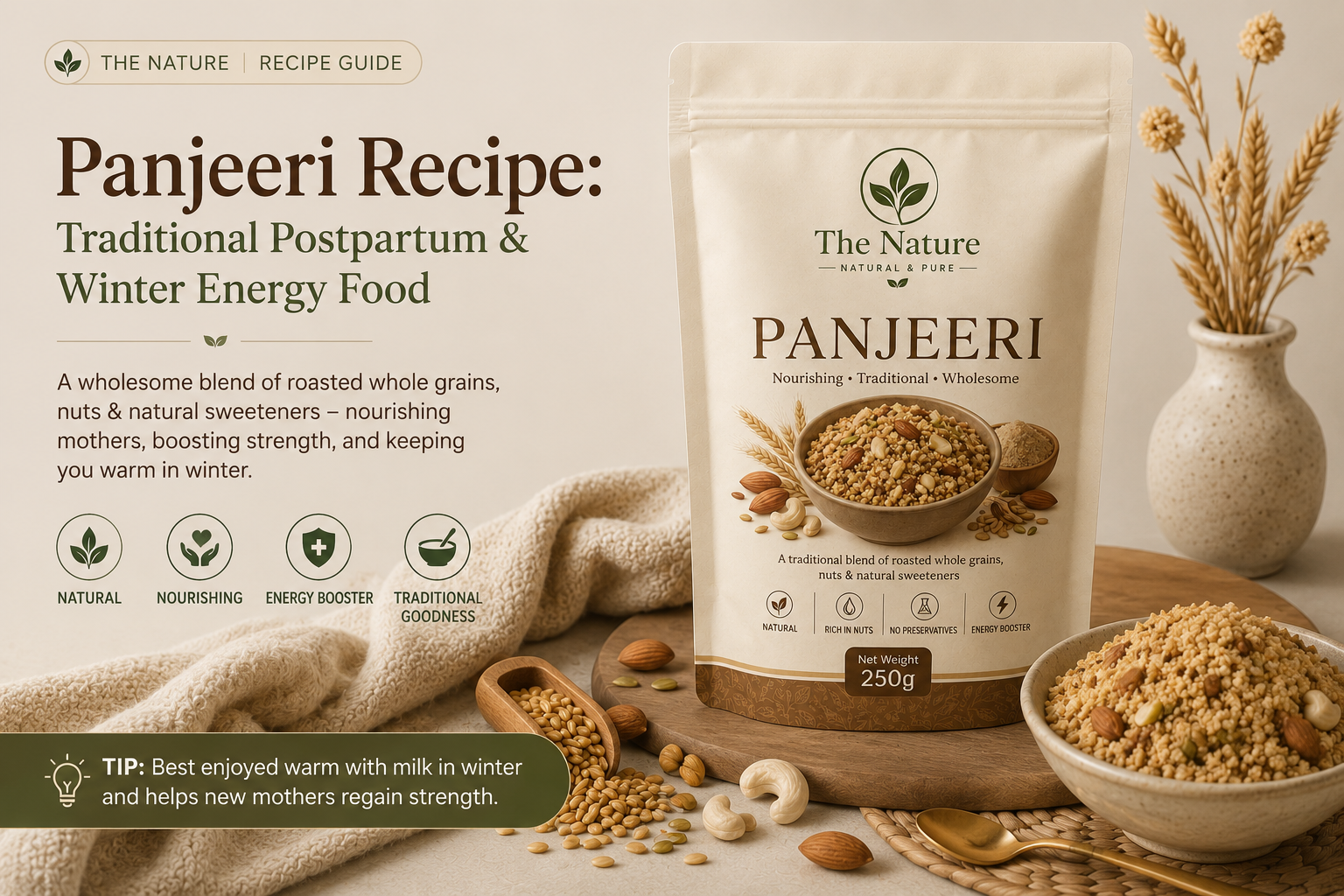
Panjeeri is a dense, energy-rich mixture built on a base of whole wheat flour slow-roasted in ghee, combined with a mix of dry fruits, edible gum (gond), and warming spices like dried ginger and nutmeg. It’s less a “recipe” in the modern sense and more a category of traditional preparation, the exact combination of nuts, seeds, and sweetener varies by region, family, and what’s being made it for.
It’s traditionally associated with two specific situations: postpartum recovery for new mothers, and general winter nourishment for the whole family during the coldest months.
Why Panjeeri Is Given to New Mothers?
In South Asian households, Panjeeri has long been considered an important part of postpartum recovery food. The reasoning behind this tradition lines up reasonably well with basic nutritional logic, even without a modern clinical study behind it specifically:
- Calorie and fat density, childbirth recovery and breastfeeding both increase caloric needs substantially, and Panjeeri’s ghee-and-nut base is a concentrated source of energy in a relatively small serving.
- Protein from nuts and gond, almonds, cashews, and edible gum contribute protein alongside the fats, supporting general tissue recovery.
- Warming spices, dried ginger and nutmeg are traditionally associated with aiding digestion and providing warmth, which matters particularly for mothers recovering during colder months.
- Convenience, a batch made in advance provides an easy, no-cooking-required food source during a period when time and energy for meal preparation are limited.
It’s worth being reasonable about this: Panjeeri is a supportive traditional food, not a substitute for medical postpartum care or a balanced overall diet. Anyone with specific dietary restrictions or health conditions during pregnancy or postpartum recovery should check with their doctor before making it a daily staple.
Why Panjeeri Is a Winter Food?
The same properties that make Panjeeri useful postpartum, dense calories, healthy fats, warming spices, are also why it’s traditionally eaten more broadly during winter. Ghee and roasted wheat provide sustained energy in cold weather, and ingredients like dried ginger and nutmeg are considered “warming” foods in traditional South Asian food culture, believed to help the body handle colder temperatures.
A Traditional Panjeeri Recipe
This follows the classic base method, quantities can be adjusted up or down depending on how much you’re making, and substitutions are common depending on what’s available.
Ingredients:
- Whole wheat flour (atta)
- Pure desi ghee
- Edible gum (gond), fried until puffed and crushed
- Almonds, roughly chopped
- Cashews, roughly chopped
- Dried coconut (khopra), grated or flaked
- Melon seeds
- Poppy seeds
- Jaggery (gur) or another natural sweetener, to taste
- Dried ginger powder (soonth) and nutmeg, for warmth and flavour
Method:
- Heat ghee in a heavy-bottomed pan on low heat.
- Fry the edible gum pieces first, they puff up quickly, so remove them as soon as they do and set aside to cool, then crush into smaller pieces.
- In the same ghee, add the whole wheat flour and roast on low-medium heat, stirring continuously, until it turns a deep golden-brown and releases a rich, nutty aroma. This step takes patience, rushing it on high heat will burn the flour before it’s properly roasted.
- Add the chopped almonds, cashews, coconut, melon seeds, and poppy seeds, and roast for a few more minutes until fragrant.
- Add the crushed gond back in, along with the jaggery, dried ginger powder, and nutmeg. Mix thoroughly while still warm so the jaggery melts and binds everything together.
- Let the mixture cool completely before storing, or shape into small balls (laddus) while still slightly warm for easy, portioned servings.
How to Store Panjeeri?
Because of its ghee content, Panjeeri needs proper storage to avoid the ghee turning rancid:
- Store in an airtight container, away from moisture.
- Keep in a cool, dry place, during hot Pakistani summers, refrigeration extends shelf life meaningfully.
- Properly stored, a well-made batch typically keeps for several weeks at room temperature in cooler months, or longer if refrigerated.
Ways to Eat It Beyond Eating It Plain
- Straight by the spoonful as a quick energy snack
- Mixed into a glass of warm milk for a nourishing drink
- Shaped into laddus for easy, grab-and-go portions
- Sprinkled over porridge or yogurt for added texture
Making It Yourself vs. Buying It Ready-Made
The traditional method above takes real time and attention, the roasting step alone can take a while to get right, and it’s easy to under- or over-roast the flour if you’re not used to making it. If you’d rather skip the process but want the same traditional combination of ingredients without preservatives or shortcuts, our Organic Panjeeri follows this same base recipe, whole wheat flour slow-roasted in pure desi ghee, combined with almonds, cashews, dried coconut, edible gum, and warming spices, with no artificial additives.
If you’re making your own batch from scratch, our Organic Desi Ghee, Almonds, and Cashews are good starting ingredients for a traditional result.
Related reading: What Is Talbina? Barley Porridge Benefits & Sunnah Foods Guide