
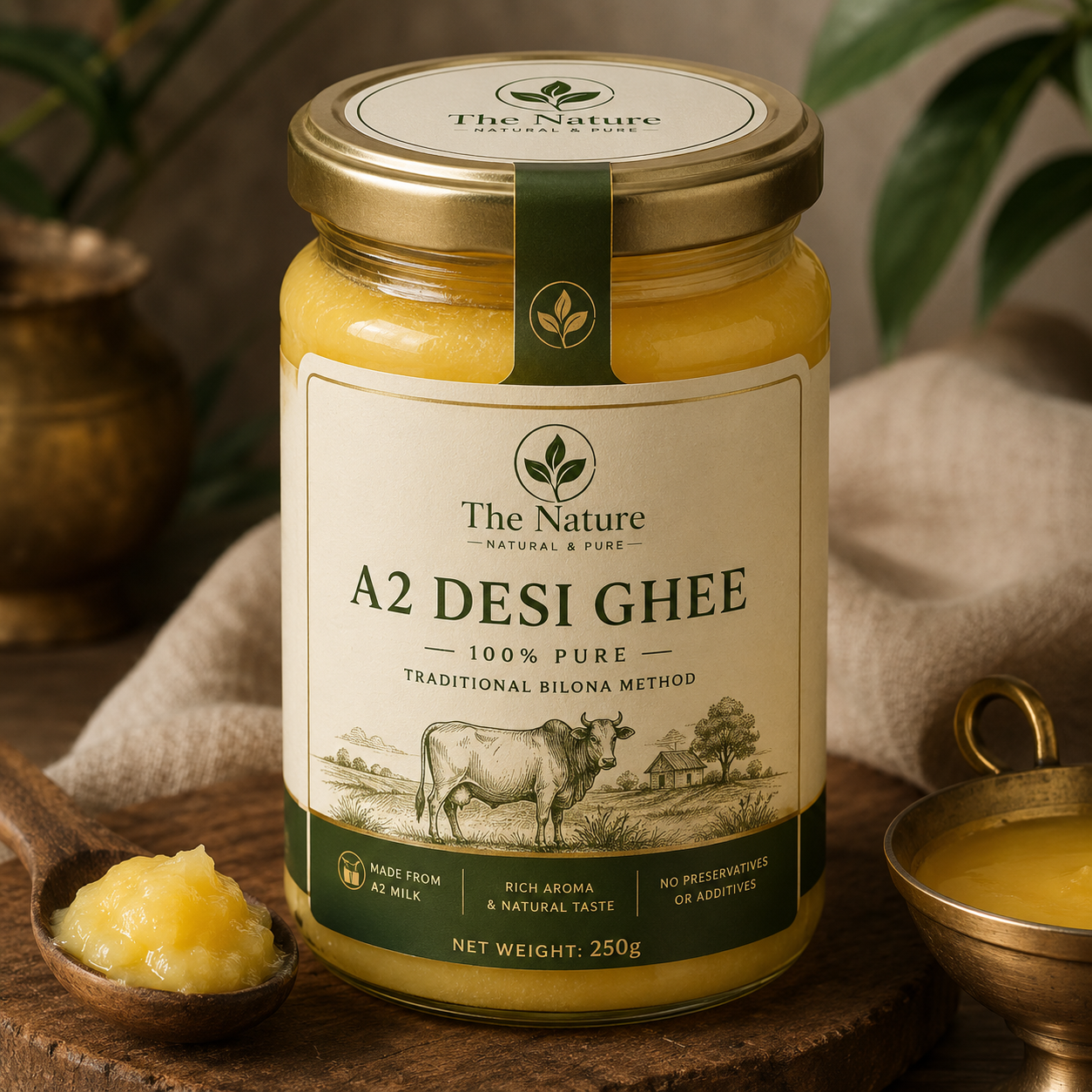
A2 Desi Ghee (Bilona Method) – The Purest Ghee Your Dadi Always Talked About
Not all ghee is created equal. And once you taste the difference, there is no going back.
For generations, Pakistani kitchens have been built around one golden ingredient, Desi Ghee (دیسی گھی). But somewhere along the way, mass production replaced the traditional method, and the ghee most of us grew up eating became a shadow of what it once was. At The Nature, we are bringing back the real thing.
Our A2 Desi Ghee is made exclusively from the milk of indigenous desi cows that naturally produce A2 beta-casein protein, the same protein structure found in human breast milk. And it is made using the ancient Bilona method, a slow, hand-churned process that takes three days to complete and cannot be rushed, because real ghee never should be.
What Makes The Nature’s A2 Bilona Ghee Different?
Every detail of how this ghee is made matters, and here is why.
Commercial ghee is made by separating cream from milk and directly heating it. It skips fermentation entirely, uses high heat machinery, and prioritizes speed over nutrition. The result is a product that looks like ghee but has lost most of what made traditional ghee so revered.
The Nature’s A2 Bilona Ghee follows the Vedic Bilona process, exactly as described in Ayurvedic tradition:
Fresh A2 milk is boiled slowly and cooled to room temperature. A natural starter culture is added and the milk is left to ferment overnight into probiotic-rich curd. The curd, not the cream, is placed in an earthen pot and churned slowly using a wooden bilona churner in both directions until pure, golden butter (makhan) rises to the top. The butter is then heated gently on a low flame until the water evaporates, leaving behind the most aromatic, nutrient-rich ghee possible.
This three-day process produces a ghee with a distinctly grainy texture, deep golden color, rich nutty aroma, and a nutritional profile that commercially processed ghee simply cannot match.
Why A2 Milk Matters?
All cow milk contains a protein called beta-casein. There are two main types, A1 and A2.
A2 beta-casein is the original milk protein, produced by indigenous desi cow breeds including Sahiwal, Tharparkar, and Red Sindhi, the same breeds that have nourished South Asian families for thousands of years. This protein is structurally similar to human breast milk and is easy for the body to digest and absorb.
A1 beta-casein is produced by most modern crossbreed and Jersey cows. Some research suggests it may release a peptide called BCM-7 during digestion, which has been associated with digestive discomfort, bloating, and inflammation in certain individuals.
By choosing A2 Bilona Ghee, you are choosing the protein your body recognizes and handles best.
Benefits of A2 Desi Ghee (Bilona Method)
Supports Healthy Digestion
A2 ghee contains butyric acid, an essential short-chain fatty acid that promotes gut health, reduces intestinal inflammation, and supports the colon and digestive system to run smoothly. It helps regulate gastric juices, prevents constipation, and soothes the gut lining. Unlike processed oils, A2 ghee aids in the digestion and absorption of fat-soluble vitamins A, D, E, and K.
Rich in Fat-Soluble Vitamins
A2 Bilona Ghee is naturally rich in Vitamins A, D, E, and K2. Vitamin K2 in particular plays a critical role in preventing calcium deposits in arteries, something most Pakistani diets are deficient in. These fat-soluble vitamins support bone health, eye health, immune function, skin quality, and overall vitality.
Supports Heart Health
The Bilona method preserves higher levels of CLA (conjugated linoleic acid), which lowers bad cholesterol and boosts good cholesterol. Vitamin K2 in A2 ghee also helps prevent arterial blockages. Contrary to outdated nutritional advice, the healthy fats in A2 ghee support rather than harm cardiovascular health when consumed in moderation.
Boosts Immunity
The antioxidants, Vitamins A, D, and E, along with butyric acid in A2 ghee collectively strengthen the immune system, protect against disease, and help the body recover faster from illness. Consuming a spoon of A2 ghee daily is one of the most straightforward Ayurvedic practices for overall immune support.
Supports Brain Health and Memory
A2 ghee is rich in DHA (an omega-3 fatty acid) and healthy saturated fats that support brain function, memory, and focus. In Ayurvedic practice, desi ghee has long been recommended for cognitive health and is traditionally given to children and students for its brain-nourishing properties.
Nourishes Skin and Hair
Known for its deeply hydrating properties, A2 ghee is used as a natural moisturizer for dry skin, chapped lips, and cracked heels. It also promotes strong, healthy hair and is used topically in traditional beauty practices across Pakistan.
Supports Weight Management
DHA and CLA, both naturally present in A2 Bilona Ghee, aid in weight management by boosting metabolism and supporting the body’s ability to burn fat. Unlike refined oils, the healthy fats in ghee promote satiety, reducing unnecessary calorie intake.
Safe for Those Sensitive to Regular Dairy
Because A2 milk is closer in protein structure to human breast milk, many people who experience discomfort with regular dairy find A2 ghee easy to digest and tolerate well. It is also a lactose-free product as the clarification process removes all milk solids.
A High Smoke Point, The Safest Cooking Fat
A2 ghee has a high smoke point of approximately 250°C, significantly higher than butter, coconut oil, and most vegetable oils. This means it does not break down into harmful free radicals at high cooking temperatures, making it the safest and most stable fat for Pakistani cooking methods including frying, tadka, and baking.
How to Use A2 Desi Ghee?
Daily Consumption:
Take 1–2 teaspoons of A2 ghee on an empty stomach in the morning for digestive support, energy, and overall wellness, a traditional Ayurvedic practice.
On Hot Roti, Paratha, and Rice:
The original and most beloved use, a generous dollop of ghee on fresh roti, paratha, or rice elevates both the flavor and nutritional value of the meal.
In Daal and Tadka:
Use A2 ghee for tarka on daal, vegetables, and sabzi for an incomparably rich, aromatic depth of flavor.
In Warm Milk:
Add a teaspoon to a glass of warm milk at night for a deeply soothing, nourishing bedtime drink that supports digestion and sleep.
In Baking and Desserts:
Use in place of butter or vegetable shortening in halwa, kheer, sheer khurma, and baked goods for an authentic, wholesome flavor.
For Skin and Hair:
Apply a small amount to dry skin patches, chapped lips, or cracked heels. Warm slightly and massage into the scalp as a deeply nourishing hair treatment.
Note: A healthy adult can typically consume 1–2 tablespoons of ghee daily. Those with existing cardiovascular conditions or high cholesterol should consult a doctor before significantly increasing ghee consumption.
Product Details
| Detail | Info |
|---|---|
| Product Name | A2 Desi Ghee, Bilona Method |
| Net Weight | 250g / 500g / 1kg (update as per your packaging) |
| Method | Traditional Bilona (Hand-Churned from Curd) |
| Milk Source | Indigenous A2 Desi Cows (Sahiwal / Tharparkar) |
| Color | Deep Golden Yellow |
| Texture | Slightly grainy, a sign of authentic Bilona ghee |
| Storage | Store at room temperature in a cool, dry place. No refrigeration required |
| Shelf Life | 12 months from production |
Frequently Asked Questions
Q: What is the difference between A2 Bilona Ghee and regular market ghee?
Regular commercial ghee is made from cream using high-heat machinery, a fast process that strips away many nutrients. A2 Bilona Ghee is made from curd (not cream) of desi cows, hand-churned with a wooden bilona, and gently heated on a low flame. This three-day traditional process preserves higher levels of vitamins, butyric acid, CLA, and healthy fatty acids that commercial processing destroys.
Q: Why does A2 Bilona Ghee have a grainy texture?
The slightly grainy texture of A2 Bilona Ghee is a natural sign of authenticity, it happens because the ghee is churned from curd rather than cream and processed slowly at low heat. It is not a defect. In fact, it is one of the most reliable indicators that you are consuming the real thing.
Q: Does A2 Bilona Ghee need to be refrigerated?
No. Pure ghee is shelf-stable and does not require refrigeration. Store at room temperature in a cool, dry place away from direct sunlight, with the lid tightly closed after each use.
Q: Is A2 Bilona Ghee safe for lactose-intolerant individuals?
Yes. The clarification process removes all milk solids including lactose and casein proteins, making pure ghee lactose-free. Many people with lactose intolerance tolerate ghee very well. However, those with severe dairy allergies should consult a doctor before use.
Q: Can A2 Bilona Ghee be used for frying?
Yes. With a smoke point of approximately 250°C, A2 ghee is one of the most stable fats available for high-temperature cooking including frying, tadka, and baking.
Q: Why is A2 Bilona Ghee more expensive than regular ghee?
Because it requires significantly more time, effort, and milk. It takes approximately 25–30 litres of A2 milk to produce one kilogram of Bilona ghee. The slow three-day Bilona process is labor-intensive and cannot be mechanized without losing the qualities that make it superior. The higher price reflects genuine quality, not marketing.
Q: Is A2 Bilona Ghee good for children?
Yes. Ghee is one of the most traditional and recommended fats for growing children in South Asian culture. A2 Bilona Ghee supports brain development, bone growth, and digestion. A small amount added to a child’s roti or rice daily is a wholesome, nourishing addition to their diet.
Go Natural. Choose The Nature.
Three days of tradition. A lifetime of nourishment. Order your A2 Desi Ghee today and bring the most authentic ghee back to your kitchen, the way it was always meant to be.
Browse more: organic foods
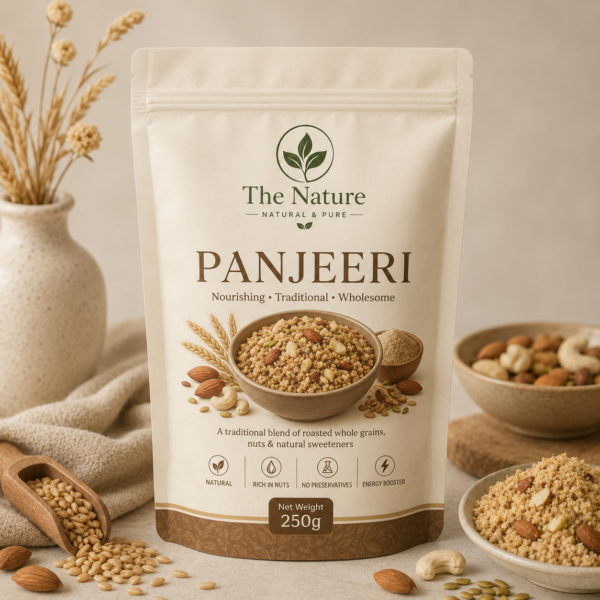
Read the guide: how desi ghee is used in panjeeri
Pairs well with: our premium almonds

Reviews
There are no reviews yet.