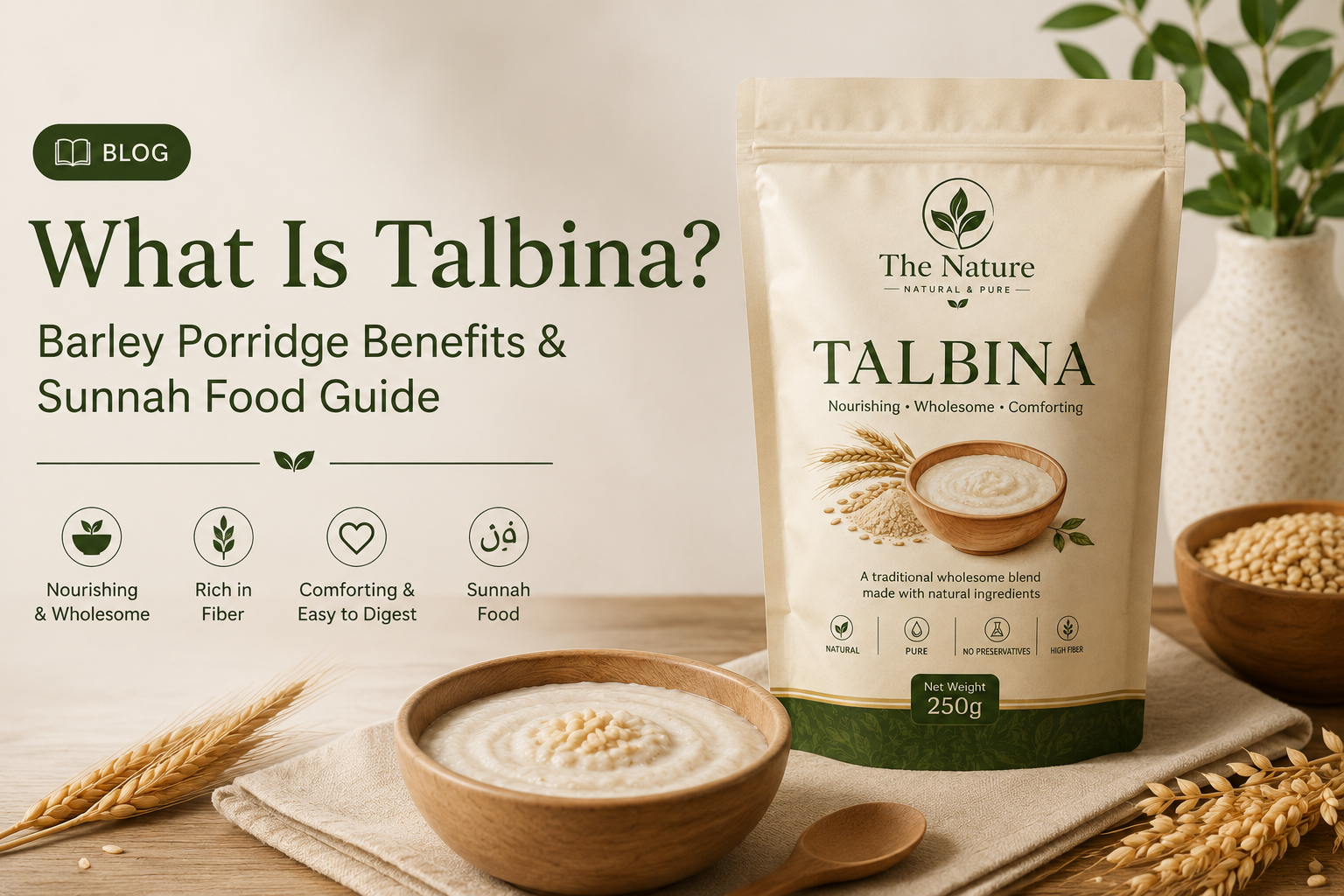
Talbina is one of those foods that comes up often in conversations about Sunnah nutrition, but not everyone knows exactly what it is, where the tradition comes from, or how to actually prepare it. Here’s a clear breakdown — what Talbina is, its authentic textual basis, and its traditional and nutritional context.
What Is Talbina?
Talbina is a light, easily digestible porridge made from ground barley (traditionally barley flour or bran cooked into a broth-like consistency, often with milk or water). Its name comes from the Arabic word laban (milk), reflecting its traditional milky, smooth texture.
The Hadith Reference
Talbina is specifically mentioned in Sahih al-Bukhari, one of the most authentic hadith collections in Islam. In one narration (Sahih al-Bukhari 5417), Aisha (may Allah be pleased with her) would order that Talbina be prepared when there was a death in the family, and would tell the women gathered, “Eat of it, for I heard Allah’s Messenger (ﷺ) saying, ‘Talbina gives comfort to the aggrieved heart and lessens grief.'”
In a related narration (Sahih al-Bukhari 5689), it’s recorded that Aisha used to recommend Talbina both for the sick and for someone grieving a death. Another narration notes she would describe it as “disliked (by the patient) although it is beneficial” — acknowledging that Talbina’s plain, simple taste isn’t necessarily appealing, even though its benefit was recognised.
This textual basis is why Talbina holds a specific place in Sunnah-based nutrition — it isn’t simply a regional dish that happens to be popular, but one with a direct basis in authentic hadith, tied specifically to periods of grief and illness.
Why Talbina Is Traditionally Given During Illness and Recovery?
A few practical qualities line up with why Talbina became associated with recovery and difficult periods specifically:
- Easy to digest — its light, smooth, porridge-like texture is gentle on the stomach, making it suitable when someone isn’t eating normally due to illness or grief.
- Simple to prepare and consume — during periods of loss or sickness, a food that requires little appetite or chewing and can be easily swallowed is practical.
- Barley’s nutritional profile — barley contains soluble fibre (beta-glucan), which supports digestion, along with a range of minerals, making it a genuinely nourishing choice even in its plainest form.
Nutritional Benefits of Barley, the Base of Talbina
Beyond its traditional and religious context, barley itself carries recognised nutritional properties:
Supports digestion — the soluble fibre in barley supports gut health and can be gentler on the digestive system than many other grains, especially useful when someone is unwell.
Sustained energy — barley releases energy more gradually than refined grains, which is part of why it’s traditionally considered a good food for sustained nourishment rather than a quick, short-lived energy spike.
Supports heart health — barley’s beta-glucan fibre content is associated with supporting healthy cholesterol levels as part of a balanced diet.
Talbina Beyond Illness: A Broader Nourishing Food
While its most specific textual mention relates to grief and illness, Talbina has also become a broader nourishing food in many households — eaten for general wellness, during postpartum recovery, or simply as a wholesome breakfast, often enriched with dry fruits for extra nutrition and flavour beyond the traditionally plain preparation.
A Simple Talbina Preparation
Basic method:
- Take a portion of ground barley flour (or a pre-mixed Talbina blend).
- Add it to warm milk or water in a saucepan.
- Cook on low-medium heat, stirring continuously, until it thickens into a smooth, porridge-like consistency.
- Sweeten lightly with honey if desired — this stays closer to the traditional, simple preparation.
Enriched variation with dry fruits and lotus seeds (makhana): For a more modern, nutrient-dense version, barley flour is often combined with almonds, cashews, walnuts, pistachios, dried dates, and lightly roasted lotus seeds before cooking — adding protein, healthy fats, and additional minerals to the traditional base while keeping the same simple cooking method.
Buying vs Making Talbina at Home
Plain Talbina (just ground barley) is straightforward to prepare at home if you can source good-quality barley flour. If you want the enriched version — barley combined with dry fruits and lotus seeds — without measuring and combining each ingredient yourself, our Organic Talbina blend combines organic barley flour with almonds, cashews, walnuts, pistachios, dried dates, and roasted lotus seeds in one ready-to-cook mix.
Related reading: Panjeeri Recipe: Traditional Postpartum & Winter Energy Food