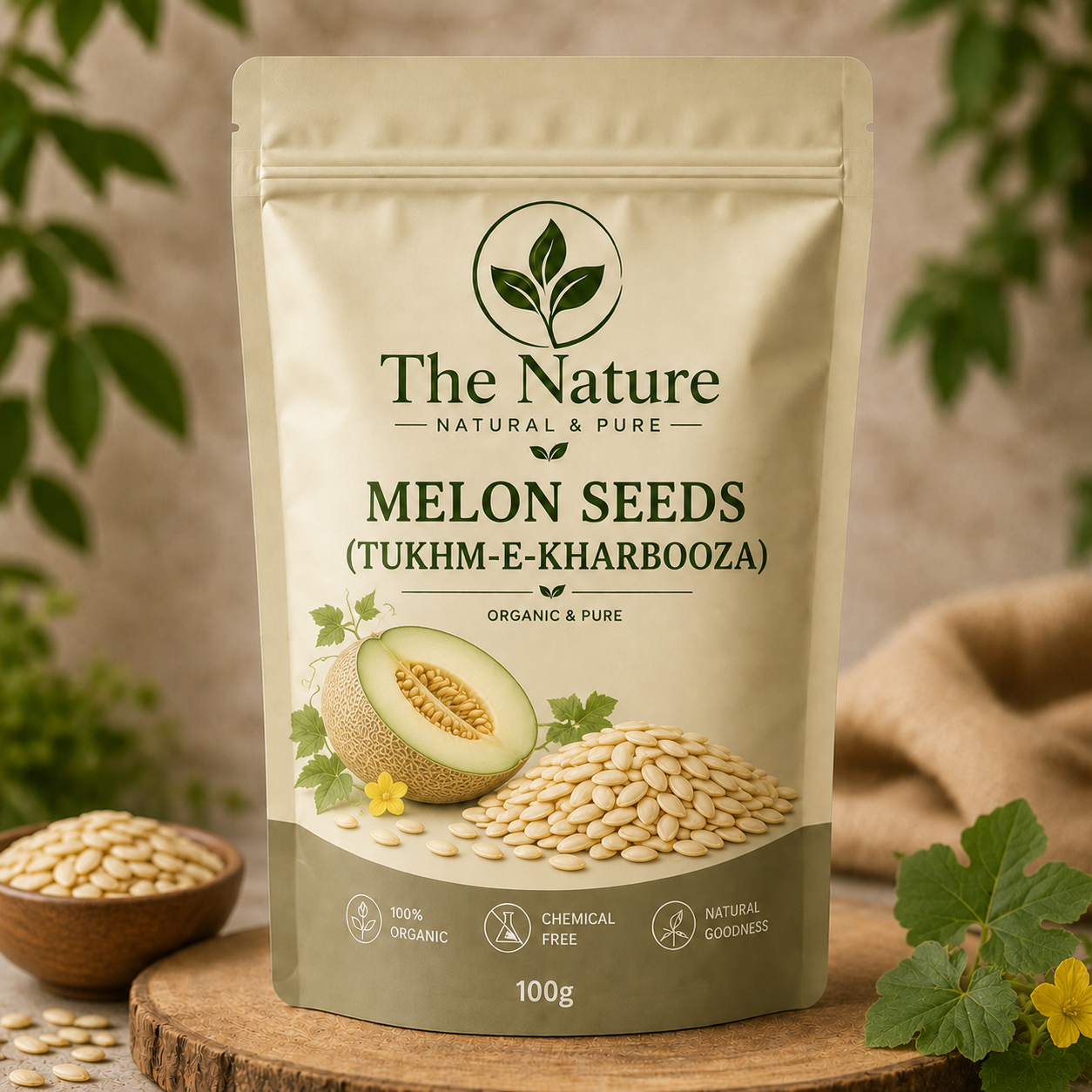
Organic Melon Seeds (Kharbuze ke Beej) – A Nutritious Seed You’ve Been Throwing Away
Every time you eat a Kharbuza and discard the seeds, you’re throwing away one of the most nutrient-dense parts of the fruit.
Known across Pakistan as Kharbuze ke Beej (خربوزے کے بیج), Melon Seeds are the small, oval, white to light brown seeds found inside the muskmelon, the sweet, fragrant summer fruit beloved across Pakistan from June through August. At The Nature, our 100% organic Melon Seeds are carefully extracted, sun-dried, and packed to preserve their natural content of plant protein, dietary fiber, omega-3 fatty acids, vitamins A, C, E and K, and essential minerals including zinc, magnesium, calcium, and phosphorus.
Whether you’re looking for a healthy snack, a plant-based protein source, or simply a versatile seed to add to your everyday cooking, Kharbuze ke Beej deliver far more than most people expect from a seed they’ve been discarding all their lives.
Why Choose The Nature’s Melon Seeds?
100% organic and pure, carefully sun-dried, no additives or artificial processing. Naturally rich in plant-based protein, dietary fiber, omega-3 fatty acids, and essential minerals. Contains vitamins A, C, E, and K alongside zinc, calcium, magnesium, and phosphorus. Naturally low in calories, a lighter snacking option. Mild, neutral flavor, easy to eat raw, roasted, or added to recipes. Naturally gluten-free and Halal.
What Makes Melon Seeds Worth Adding to Your Kitchen?
A Solid Source of Plant-Based Protein
Melon seeds are a source of plant-based protein, a useful option for those who don’t eat meat. For vegetarians and anyone looking to add more plant-based protein to their diet, a handful of Kharbuze ke Beej provides a meaningful contribution without any meat or dairy.
Naturally Rich in Fiber
Melon seeds contain a good amount of dietary fiber, making them a filling, satisfying snack between meals.
A Source of Vitamins and Minerals
Melon seeds contain zinc, magnesium, vitamin B complex, vitamin C, and vitamin A, contributing to their well-rounded nutritional profile.
Naturally Low in Calories
Their fiber content makes them a filling option in smaller portions, and they’re naturally low in calories compared to many packaged snacks.
How to Use Melon Seeds (Kharbuze ke Beej)?
As a Daily Snack:
Eat a small handful of raw or dry-roasted melon seeds as a snack between meals. They have a mild, neutral flavor that makes them easy to enjoy on their own.
Roasted Namkeen Style:
Dry-roast melon seeds in a pan over low heat for 3–5 minutes until lightly golden. Toss with a pinch of sea salt, chaat masala, or black pepper and allow to cool. Store in an airtight container for a crunchy snack.
Sprinkled Over Food:
Add to salads, yogurt, oatmeal, soups, or fruit bowls for extra protein and a pleasant crunch.
In Smoothies and Baking:
Blend into smoothies for added plant protein, or incorporate into bread, muffins, and energy bars.
Ground Into a Paste:
Grind melon seeds into a fine paste and use as a base for sauces, curries, or traditional sharbat preparations for a rich, creamy texture.
Note: Consume in moderate amounts, as with any high-fiber food, large quantities may cause mild bloating for some people. Those with seed allergies should start with a small amount and monitor for any reaction.
Product Details
| Detail | Info |
|---|---|
| Product Name | Organic Melon Seeds (Kharbuze ke Beej / خربوزے کے بیج) |
| Net Weight | 100g / 200g (update as per your packaging) |
| Form | Whole Seeds |
| Scientific Name | Cucumis melo |
| Origin | 100% Natural, Sun-Dried |
| Storage | Store in a cool, dry place away from moisture and heat |
| Shelf Life | 12 months from packaging |
Frequently Asked Questions
Q: What are Kharbuze ke Beej in English?
Kharbuze ke Beej are the seeds of the muskmelon fruit, known in English as Melon Seeds or Muskmelon Seeds. They are oval-shaped, white to light brown in color, and found inside the Kharbuza fruit. They should not be confused with watermelon seeds, which are black and come from a different fruit entirely.
Q: Can I eat melon seeds raw?
Yes. Melon seeds can be eaten raw, roasted, or added to recipes. Raw seeds are mild in flavor and easy to sprinkle over food or eat as a snack. Roasting enhances their flavor and gives them a pleasant crunch.
Q: How many melon seeds can I eat per day?
A small handful, approximately 20–30g, is a common everyday serving. As with any seed, moderation is recommended to avoid digestive discomfort.
Q: Are melon seeds the same as watermelon seeds?
No. They come from different fruits and have slightly different nutritional profiles. Kharbuze ke Beej are the seeds of the muskmelon (Kharbuza), while watermelon seeds come from Tarbooz. Both are nutritious, but they are separate products with different textures and flavors.
Q: Can children eat melon seeds?
Yes. Melon seeds are a suitable snack for children in small amounts. Roasted and lightly seasoned, they make an alternative to packaged chips and biscuits.
Go Natural. Choose The Nature.
A nutritious seed you’ve been discarding all your life, now available in its purest, most organic form. Order your Melon Seeds today and start making the most of what nature packed inside every Kharbuza.
Browse more: seeds and herbs



Reviews
There are no reviews yet.