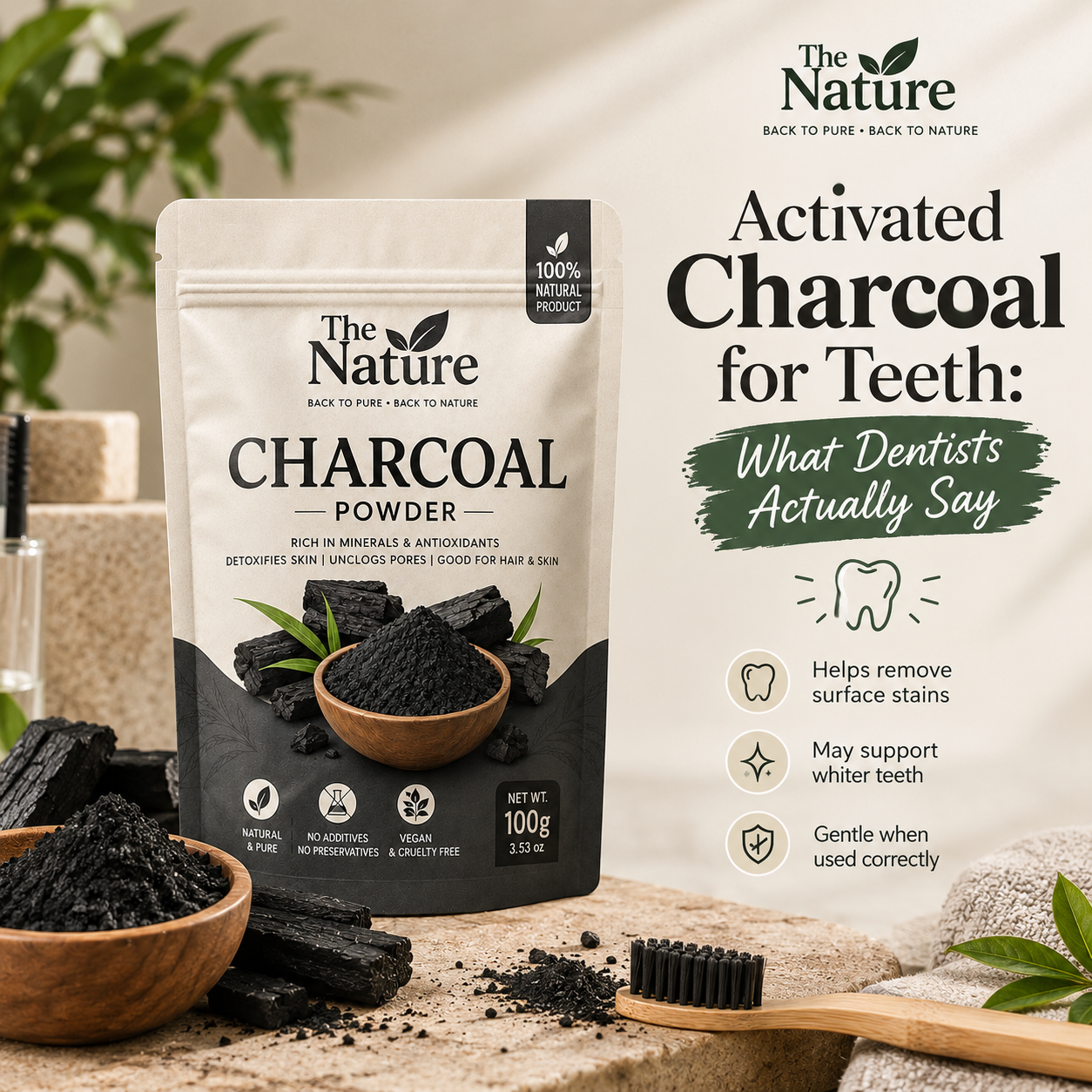
Activated Charcoal for Teeth: What Dentists Actually Say
Activated charcoal has become one of the most talked-about natural beauty trends of the past several years, and teeth whitening is its most searched use. Before recommending how to use it, it’s worth being straightforward about something most marketing around this ingredient glosses over: the dental research is genuinely more cautious than the trend suggests.
What Activated Charcoal Actually Is?
Activated charcoal is a fine, highly porous black powder created by heating carbon-rich materials (wood, coconut shells, bamboo) at extremely high temperatures, which dramatically increases its surface area and gives it strong adsorptive properties — meaning it can trap and bind to substances that come into contact with it. This same property is used in emergency medicine for certain types of poisoning.
What the Dental Research Actually Says?
This is the section most articles on this topic skip, and it’s worth being direct about:
- The American Dental Association has not approved any activated charcoal product for dental use.
- A 2022 systematic review of in vitro studies concluded that activated charcoal-based toothpastes have a lower whitening effect than other alternatives and can be considered less safe due to their high abrasive potential.
- Multiple dental sources note that any apparent whitening effect is more likely due to charcoal’s abrasive texture scrubbing away surface stains and plaque — not any actual bleaching or chemical whitening action, which is how conventional whitening treatments (containing peroxide) actually work.
- Because tooth enamel does not regenerate once worn down, repeated abrasive use carries a real long-term risk: as enamel thins, the darker dentin layer underneath can become more visible, potentially making teeth look more yellow over time rather than whiter.
This doesn’t mean activated charcoal is dangerous when used occasionally and carefully — but it does mean the “natural alternative to professional whitening” framing oversells what it can actually deliver, and understates the enamel-wear risk with frequent use.
What Activated Charcoal Can Realistically Do?
Used sparingly and correctly, activated charcoal may help with:
- Removing surface stains from coffee, tea, and similar everyday culprits — this is a plausible, mechanical effect (adsorption plus mild abrasion), separate from true whitening.
- A short-term brighter appearance from stain and plaque removal, which some people notice and appreciate, even though it isn’t altering the actual colour of the tooth itself.
How to Use It Responsibly?
Given the enamel-wear concern, moderation matters more here than with most other natural ingredients on this site:
- Use no more than 1–2 times per week, not daily — this is a point dental sources are consistent about.
- Wet your toothbrush, dip lightly into the powder, and brush gently for 1–2 minutes rather than scrubbing vigorously.
- Rinse thoroughly afterward.
- If you notice any tooth sensitivity developing, stop use and consider switching to conventional fluoride toothpaste, which remains the dentist-recommended standard for both cavity prevention and enamel health.
- If teeth whitening is a priority for you, a conversation with your dentist about professional or ADA-approved at-home options will likely give more reliable, better-evidenced results than any natural alternative, activated charcoal included.
Where Activated Charcoal Has Better-Supported Uses?
Its adsorptive properties are more straightforwardly useful outside the mouth:
For skin — used as a face mask (mixed with aloe vera gel or water), activated charcoal’s ability to draw out dirt, oil, and impurities from pores is a more mechanically plausible and lower-risk use than teeth whitening, since there’s no enamel-equivalent wear concern with skin. It’s particularly suited to oily or acne-prone skin.
For hair and scalp — mixed into shampoo occasionally, it can help lift product buildup and excess oil from the scalp.
For freshening breath — its odor-neutralizing properties can help with breath freshness, independent of any whitening claim.
The Bottom Line
If you’re drawn to activated charcoal specifically for teeth whitening, it’s fair to try it occasionally with the moderation guidelines above, but it’s worth knowing going in that dental research doesn’t support strong whitening claims, and enamel safety is a genuine, evidence-backed concern with frequent use. Its skin and scalp uses have a more favourable risk-to-benefit picture.
Shop Activated Charcoal Powder →
Related reading: Chemical-Free Hair Oil: How to Actually Tell What You’re Buying