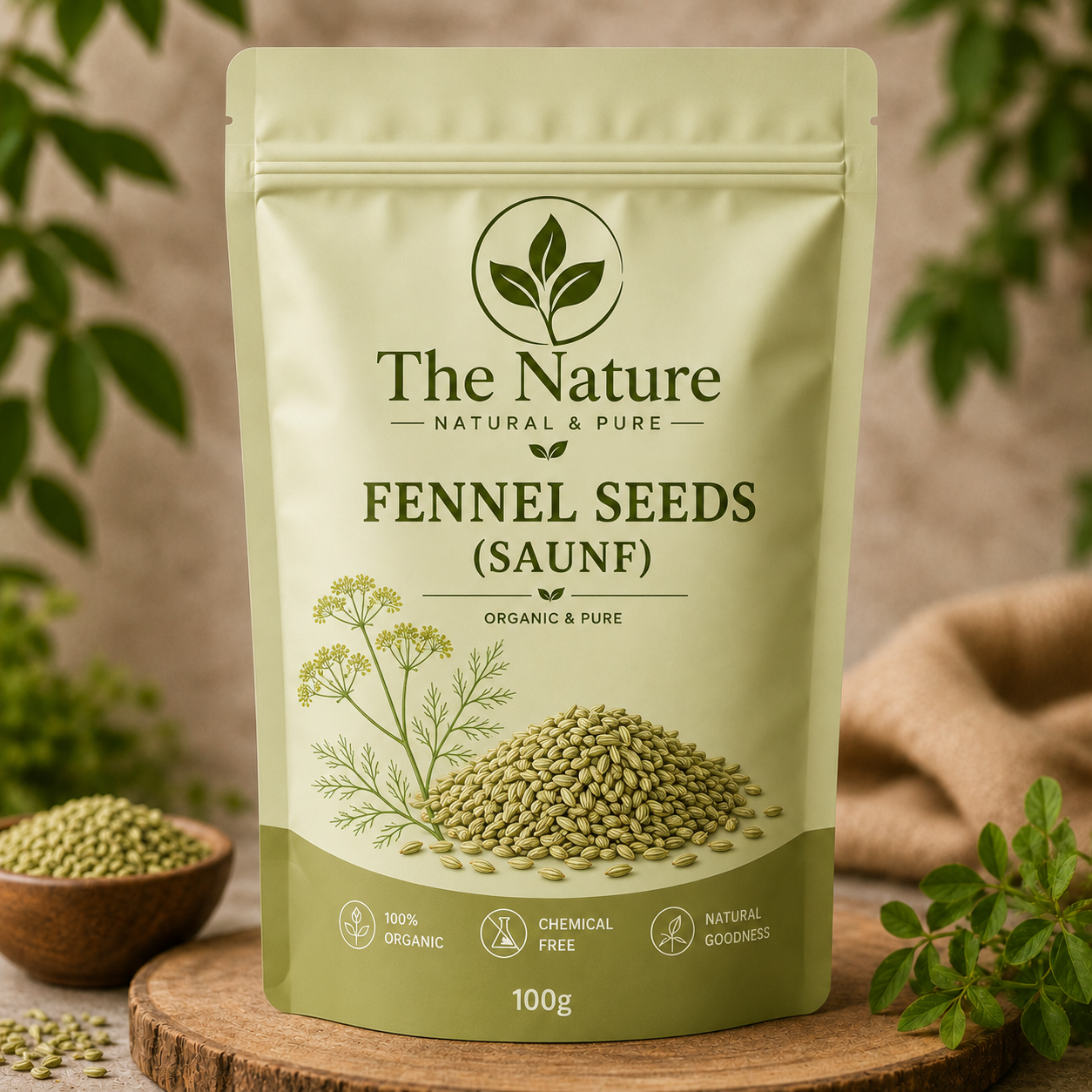
Organic Fennel Seeds (Saunf) – The After-Meal Ritual Loved for Generations
The small bowl of Saunf at the end of every desi meal isn’t just a tradition. It’s a handful of seeds with centuries of culinary history behind it.
Known across Pakistan as Saunf (سونف), Fennel Seeds are one of the most beloved and widely used herbs in South Asian cooking. At The Nature, our 100% organic Fennel Seeds are sourced with care and packed fresh to preserve their natural sweetness and aroma.
Whether you reach for them after a heavy meal, brew them into a warm tea, or add them to your curries and biryanis for flavor, Saunf has quietly earned its place as one of the most versatile herbs in your kitchen.
Why Choose The Nature’s Fennel Seeds (Saunf)?
- 100% organic and pure — no additives, preservatives, or artificial processing
- Naturally rich in fiber and minerals including potassium, iron, calcium, and magnesium
- Naturally sweet and aromatic, with a mild licorice-like flavor
- Versatile for cooking, herbal tea, Saunf water, and everyday use
- A trusted desi kitchen staple in Pakistani households for generations
Why People Love Fennel Seeds (Saunf)?
A Post-Meal Favorite
Fennel seeds are one of the most recognizable after-meal traditions in South Asian households. Their natural oils and aromatic compounds are part of why a small bowl of roasted Saunf sits at the counter of nearly every desi restaurant.
A Natural Mouth Freshener
Chewing Saunf after meals is a time-honored way to freshen breath. Their strong aromatic oils are a big part of why fennel seeds remain a popular natural mouth freshener in homes and restaurants across Pakistan.
A Kitchen Staple with a Long Tradition
Fennel seeds contain naturally occurring plant compounds, and have long held a place in traditional South Asian food culture, often enjoyed by women as part of everyday routines.
A Flavorful Addition to a Balanced Diet
Saunf water is a well-known daily ritual in many Pakistani households. Their fiber content is one reason people find them satisfying, and they’re often enjoyed as part of a broader focus on a healthy diet and active lifestyle.
A Source of Fiber and Minerals
Fennel seeds naturally contain fiber and potassium, nutrients many people look for as part of a varied, balanced diet.
Naturally Rich in Vitamin A
Fennel seeds contain Vitamin A, a nutrient commonly found in a varied diet.
A Traditional Addition to Nursing Mothers’ Diets
Fennel seeds have a long history of traditional culinary use among nursing mothers across South Asian cultures. As with any dietary change while breastfeeding, we recommend speaking with a healthcare provider first.
A Natural Ingredient in DIY Skincare
Fennel seeds contain natural antioxidant compounds. Fennel water is also a popular ingredient in DIY face-toner routines among those who enjoy natural skincare rituals.
How to Use Fennel Seeds (Saunf)?
Chewing After Meals: Chew a small pinch of raw fennel seeds after lunch or dinner — the most traditional and widely practiced use across Pakistan.
Saunf Water: Soak 1 teaspoon of Saunf in a glass of water overnight and drink in the morning as part of your daily routine.
Saunf Tea (Qahwa): Boil 1 teaspoon of fennel seeds in water for 5–7 minutes, strain, and drink warm. Add honey for a soothing herbal tea.
In Cooking: Add to curries, pulao, biryani, daal, pickles, and baked goods for their distinctive sweet aroma.
Face Toner: Boil fennel seeds in water, let cool completely, strain, and apply to the face with a cotton pad as part of a natural skincare routine.
Note: Fennel seeds are generally recognized as safe in normal food amounts. As with any herb, those who are pregnant, breastfeeding, or have specific health conditions should consult a healthcare provider before regular or concentrated use.
Product Details
| Detail | Info |
|---|---|
| Product Name | Organic Fennel Seeds (Saunf / سونف) |
| Net Weight | 100g / 200g |
| Form | Whole Seeds |
| Scientific Name | Foeniculum vulgare |
| Origin | 100% Natural, Organically Grown |
| Storage | Store in a cool, dry place away from moisture |
| Shelf Life | 24 months from packaging |
Frequently Asked Questions
Q: What is Saunf and why is it eaten after meals?
Saunf is the Urdu name for Fennel Seeds. It’s traditionally eaten after meals for its aromatic compounds and natural breath-freshening effect — a practice followed in Pakistani and South Asian households for generations.
Q: Is Saunf water a common daily habit in Pakistan?
Yes. Drinking Saunf water is a common daily ritual in many households, often as part of an overall focus on a healthy diet and active lifestyle.
Q: Is Saunf a traditional part of women’s wellness routines?
Yes. Saunf has a long history in South Asian households and is often included as part of everyday routines and natural remedies passed down through generations.
Q: Can I drink Saunf water every day?
Many people enjoy fennel seed water daily as part of their routine, typically soaking one teaspoon of seeds overnight.
Q: Is Saunf traditionally used for newborns?
Diluted fennel water has a long traditional history of use in South Asian households. However, we strongly recommend consulting a pediatrician before giving any herbal preparation to a newborn.
Q: Can Saunf help with bad breath?
Yes — fennel seeds are one of the most well-known natural breath fresheners, thanks to their aromatic oils.
Q: Is Saunf safe during pregnancy?
In small culinary amounts, Saunf is a common ingredient in everyday cooking. Pregnant women should consult their healthcare provider before consuming larger or concentrated amounts.
Q: How much Saunf should I consume daily?
Half to one teaspoon daily is a commonly enjoyed amount. As with any seed or spice, moderation is recommended, and those with sensitivities should take note of how their body responds.
Go Natural. Choose The Nature.
The desi after-meal ritual loved for centuries, now in its purest, most organic form. Order your Fennel Seeds today and make Saunf a part of your everyday routine.



Reviews
There are no reviews yet.